
The First
Stewards
The Ngäbe-Buglé People
Long before Tai Nuare held a name, this land held a people. The Ngäbe-Buglé and their ancestors have lived in relationship with the forests, coasts, and islands of western Panama for thousands of years.
"Tai Nuare is built upon ancestral Ngäbe-Buglé territory. We do not simply acknowledge this — we receive it as the foundational truth of every decision we make regarding this land."
Land Acknowledgement · Tai Nuare Foundation
The Forest Path · Daily Life
"To walk the forest with a Ngäbe guide is to realize you have been functionally blind to a world that is vividly alive and speaking."
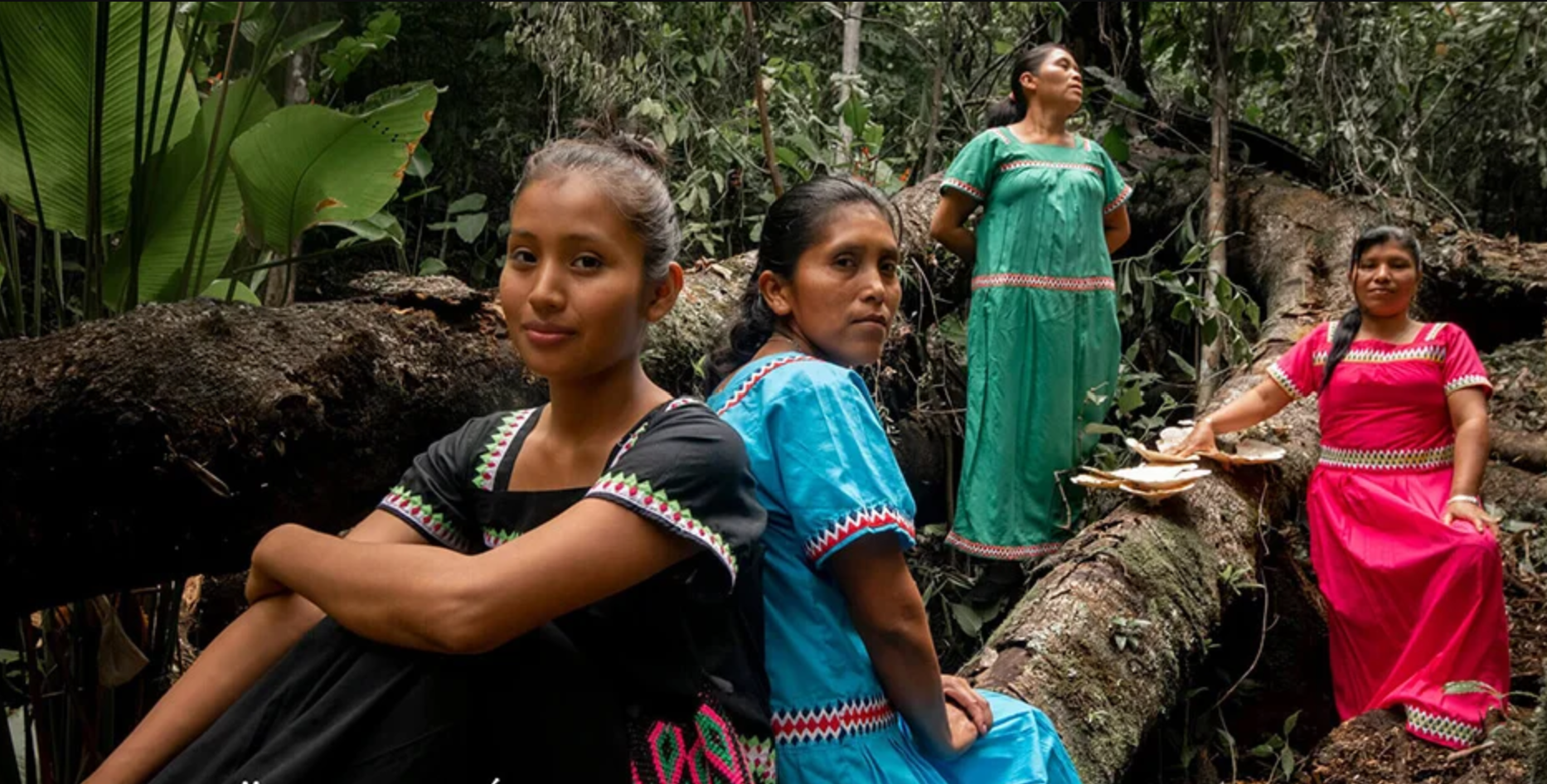
Ngäbe-Buglé Women · Carrying Chácaras · Panama Rainforest
Cristóbal Island · Bocas del Toro
"The waters of the archipelago do not divide us; they are the shared roads that sustain both our peoples."
Messijablado Community · Bocas del Toro Province
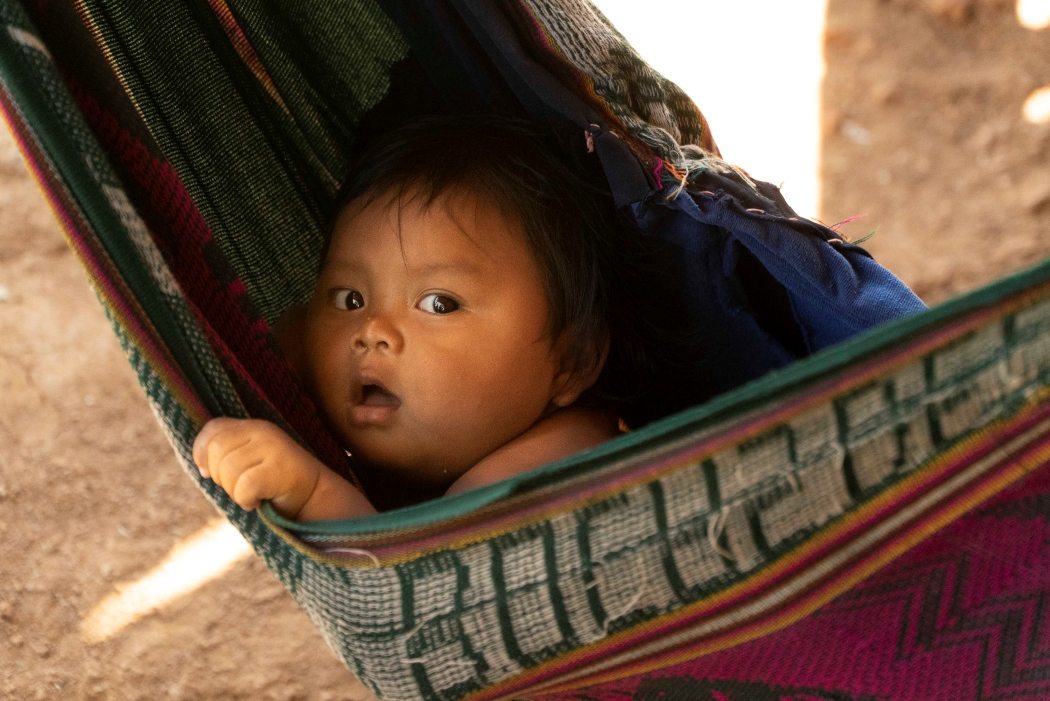
The Next Generation · Living Identity
"To see a child in a nagua is to see a culture that has not surrendered. It is a living declaration worn daily."
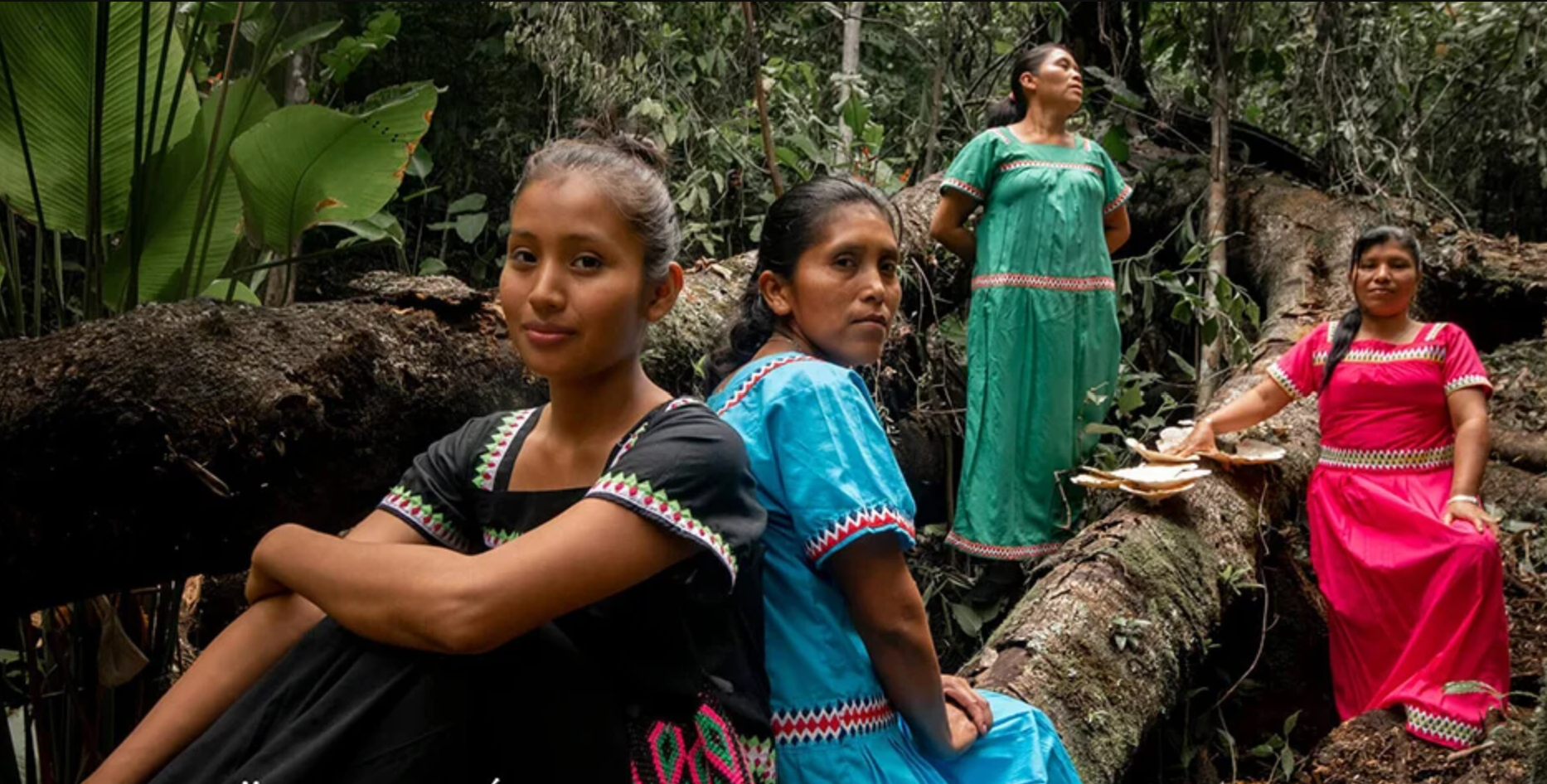
A Civilization in the Forest
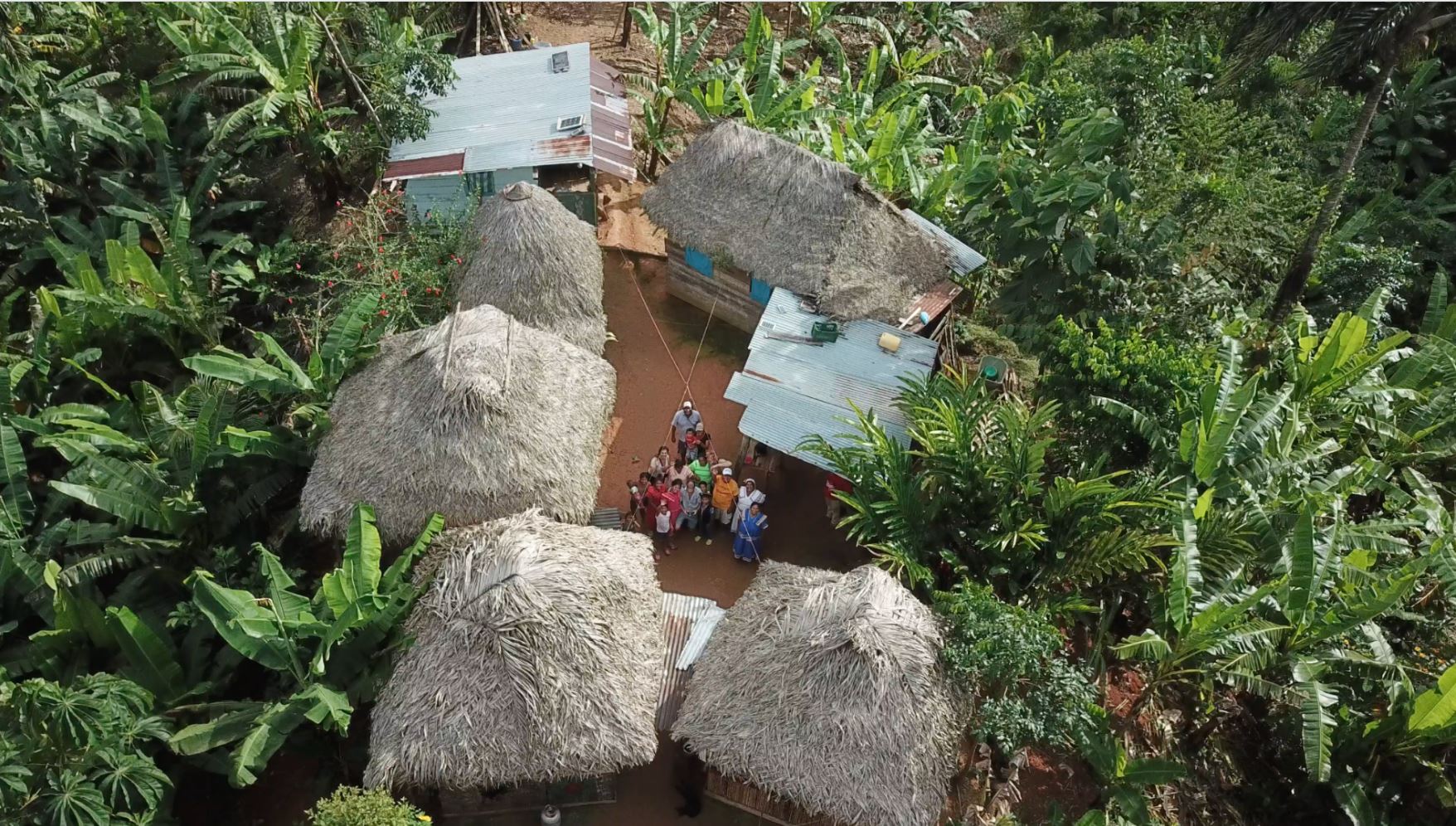
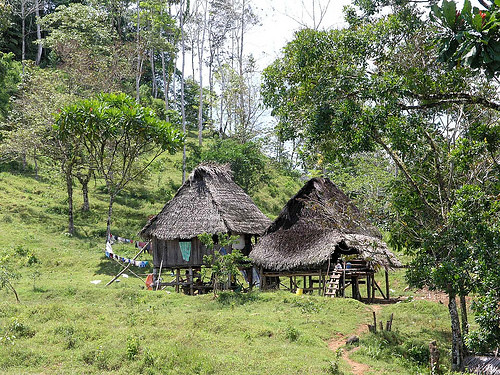
For thousands of years, the Ngäbe-Buglé have structured their communities in harmony with the challenging topography of western Panama.
Their traditional thatched-roof homes, built without nails using natural forest materials, are designed to breathe in the tropical heat while withstanding intense seasonal rains.
This is not a forgotten past; it is a deeply adapted present, continually refined across generations of ecological observation.
Seven Dimensions of a Living World
The Ngäbe-Buglé do not separate culture from ecology. Their spiritual practices, arts, and daily rhythms are expressions of an unbroken relationship with the natural world.
Spiritual Sovereignty
The Ngäbe practice Mama Tata and Sukianism — centering the sacredness of the natural world. Waterfalls, forests, and rivers are not scenery; they are altars attended with ceremony across every generation.
Textile Arts & Chácaras
The chácara — hand-knotted from natural pita palm — carries geometric patterns encoding lineage, identity, and relationship to land. Carried on the back through jungle and field, it is both tool and living declaration.
Oral Cosmology
Knowledge transmitted through story, song, and ceremony. The oral tradition is a living library — ecological knowledge, genealogy, law, and spiritual teaching woven into spoken word, passed intact without writing.
Cacao & Forest Cultivation
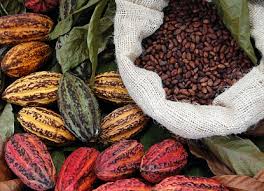
The Ngäbe-Buglé cultivate organic cacao, corn, plantains, and cassava with deep ancestral knowledge. The ÑöBä Chocolate Farm represents this tradition meeting the present — community-owned, organic, alive.
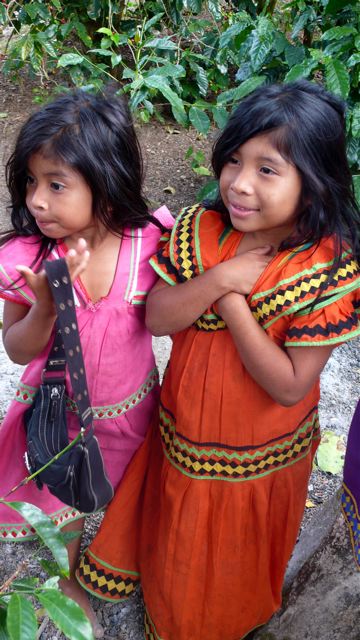
Nagua — The Sacred Dress
Vibrantly colored, geometrically bold, worn daily from childhood. Its diamond pattern originates from the legend of the serpent Makata, whose skin was first woven into the nagua fabric by a young woman named Mesi Kwira.
Community & Canoe Life
On the islands of Bocas del Toro, the canoe is the road. Communities live without electricity or running water, in full relationship with the sea for fishing, transport, and sustenance — unchanged across centuries.
Objects that carry the world inside them
Ngäbe-Buglé craft traditions are not decorative. They are functional, spiritual, and deeply tied to the materials provided by the forest.
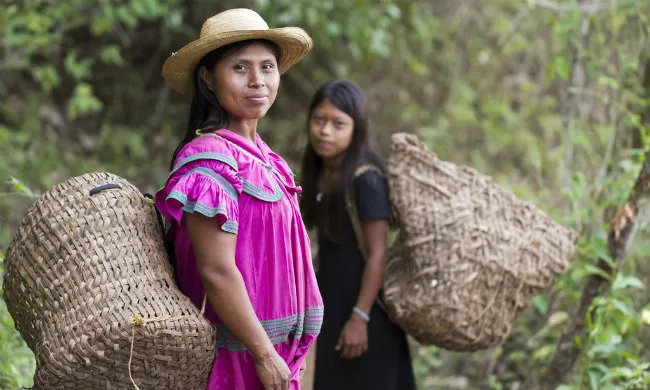
Chácara
Hand-Knotted Fiber · Passed Hand to Hand
A Ngäbe woman teaches the ancient art of chácara weaving — each knot a word in a language older than writing. The geometric pattern she passes on has traveled through centuries, unchanged and alive.
ÑöBä Chocolate Farm
Sustainable · Community-Owned · Organic
Deep in the jungle of Bocas del Toro, a hand-painted yellow sign marks the entrance to a community-owned organic cacao farm. The Ngäbe-Buglé have cultivated cacao in these forests for generations.
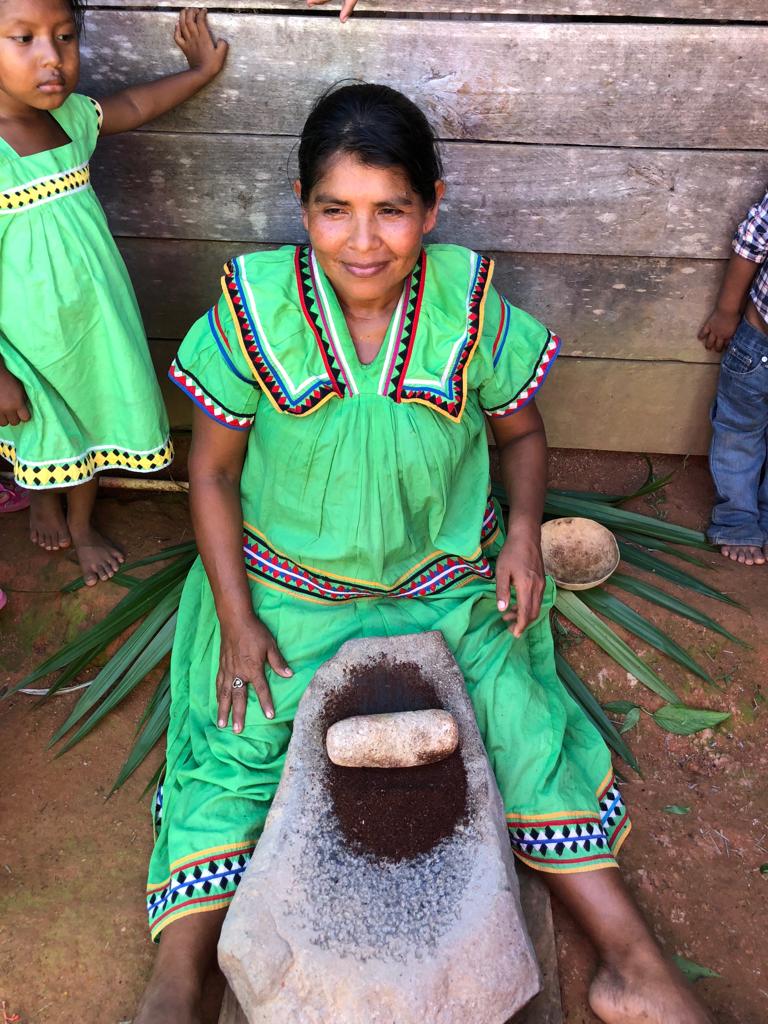
Grinding Cacao
Stone Metate · Ancient Practice · Unbroken
A woman in a vibrant green nagua sits before a stone metate, grinding cacao with a cylindrical roller as her daughter watches. The stone is worn smooth by generations of the same motion.
Surviving, resisting, enduring
To understand the Ngäbe-Buglé is to understand a 500-year story of resilience.
How Tai Nuare holds this relationship
Acknowledgement without action is hollow. Tai Nuare's covenant with the Ngäbe-Buglé people is not a policy document — it is a set of living principles that guide our development, community integration, and economic practices.
Prior Consultation & Consent
We do not proceed with developments or land-use decisions that could affect the Ngäbe-Buglé community without genuine prior consultation — real dialogue, not token notification.
Economic Inclusion
Ngäbe-Buglé artisans, craftspeople, cacao farmers, and cultural guides are active participants in the Tai Nuare economy — not as backdrop but as valued partners generating genuine economic benefit.
Cultural Integrity
The Ngäbe-Buglé culture is never reduced to spectacle or tourism prop at Tai Nuare. Residents and guests engage through genuine exchange, with the full agency and authority of the Ngäbe-Buglé people themselves.
Ecological Partnership
The Ngäbe-Buglé hold generations of ecological knowledge about this specific landscape. We actively seek and honor that knowledge in our land management, regenerative systems, and conservation practices.
Territorial Respect
The boundaries of the Ngäbe-Buglé comarca are sovereign. Tai Nuare does not support, enable, or benefit from any activity that encroaches on, diminishes, or exploits indigenous territorial rights.
Living Review
This covenant is not fixed text. It is a living commitment reviewed annually in direct dialogue with Ngäbe-Buglé community representatives — expected to deepen and become more reciprocal each year.
"We did not arrive on empty land. We arrived into a living story."
Why this matters to how you live at Tai Nuare
Every resident choosing Tai Nuare enters a web of relationships. The land, the water, the wildlife, and the people who have stewarded this place since time before memory.
The question is not whether we will have a relationship with the Ngäbe-Buglé, but what kind of relationship it will be. We reject the model of isolated enclaves that ignore their neighbors.
Instead, we invite residents into a model of shared thriving, where the presence of the indigenous community enriches our understanding of what it means to live well on this Earth.
Residents engage with Ngäbe-Buglé artisans and guides through respectful, community-led programs — never as spectators of someone else's identity.
Authentic Ngäbe-Buglé goods available throughout Tai Nuare — purchased directly from artisan cooperatives at fair prices, without intermediaries.
Ngäbe-Buglé plant and forest knowledge informs our food forest, botanical gardens, and land restoration — with proper attribution and compensation.
Ngäbe-Buglé community members are actively recruited in skilled roles — construction, hospitality, land management, and cultural programming.
"We build Tai Nuare not on land we own, but on land we have been entrusted to hold — and this distinction is the first and most important truth of everything we do here."
Orion · Founder, Tai Nuare Peninsula