
Beneath the surface, the reef remembers everything.
The waters surrounding San Cristóbal contain some of the Caribbean's most biodiverse coral systems—128 reef fish species documented across the Bocas archipelago, seagrass meadows dense with life, and open channels frequented by resident dolphin pods.
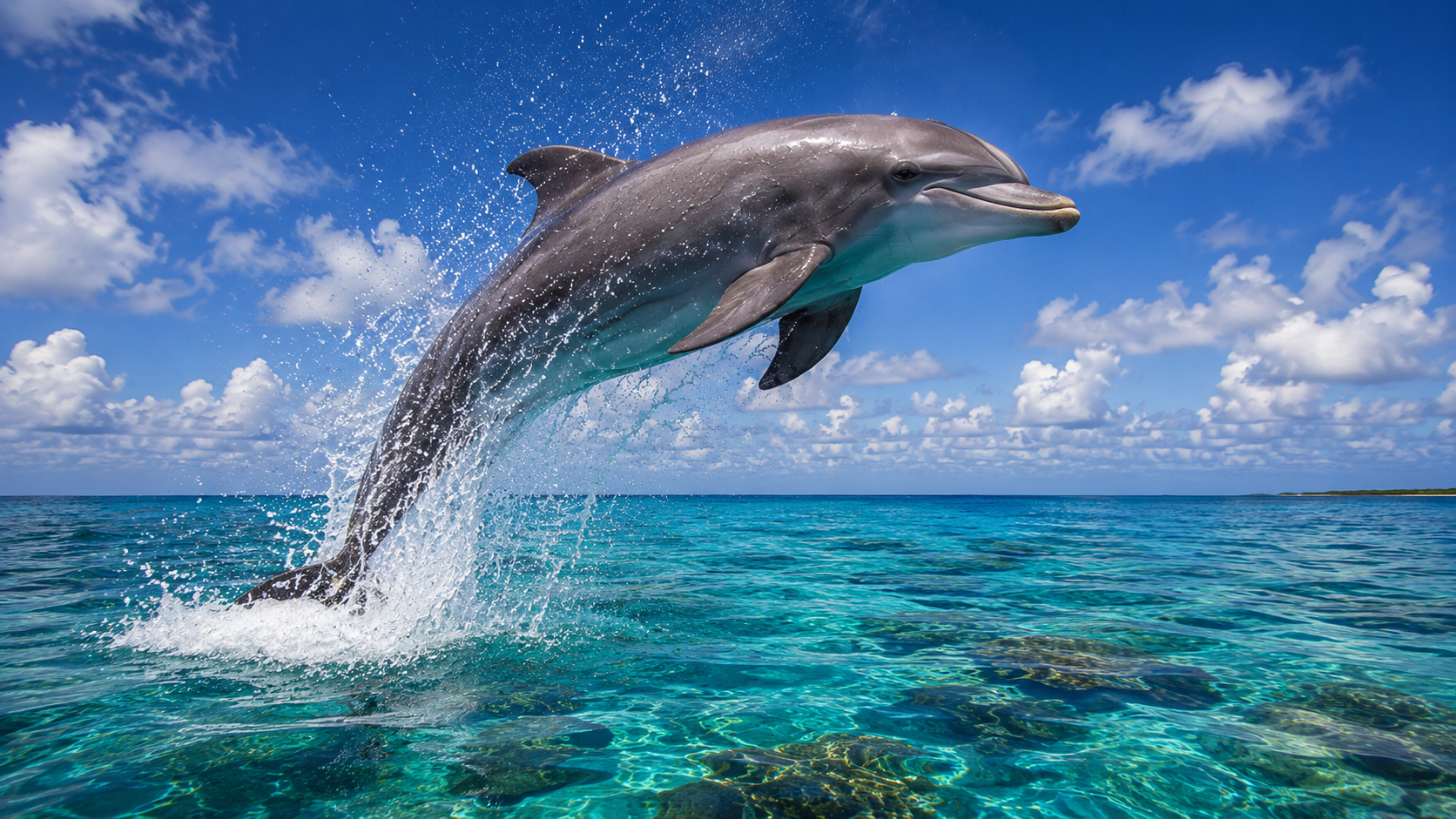 Resident Pod
Bottlenose Dolphin
Tursiops truncatus
Open Water · Channels
A resident pod calls the Bocas archipelago home year-round. Often seen surfing bow wakes at dawn in the channels near San Cristóbal—one of the most joyful wildlife encounters on the peninsula.
Least Concern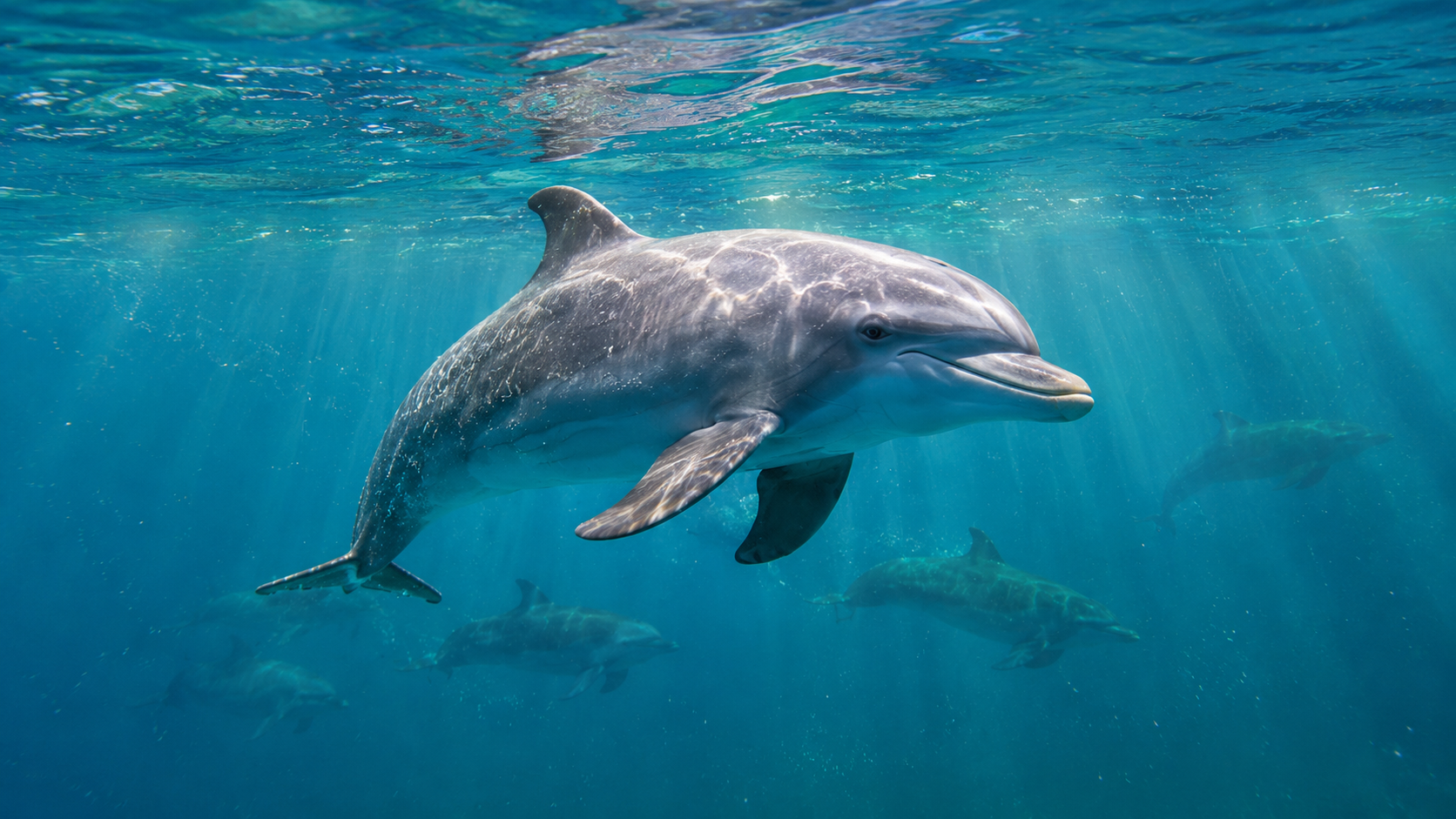 1 of 2 C.A. Populations
Guiana Dolphin
Sotalia guianensis
Coastal Lagoons · River Mouths
One of only two known Central American populations. Smaller and shyer than bottlenose dolphins, they navigate the tannin-dark waterways near the archipelago with quiet intelligence.
Near Threatened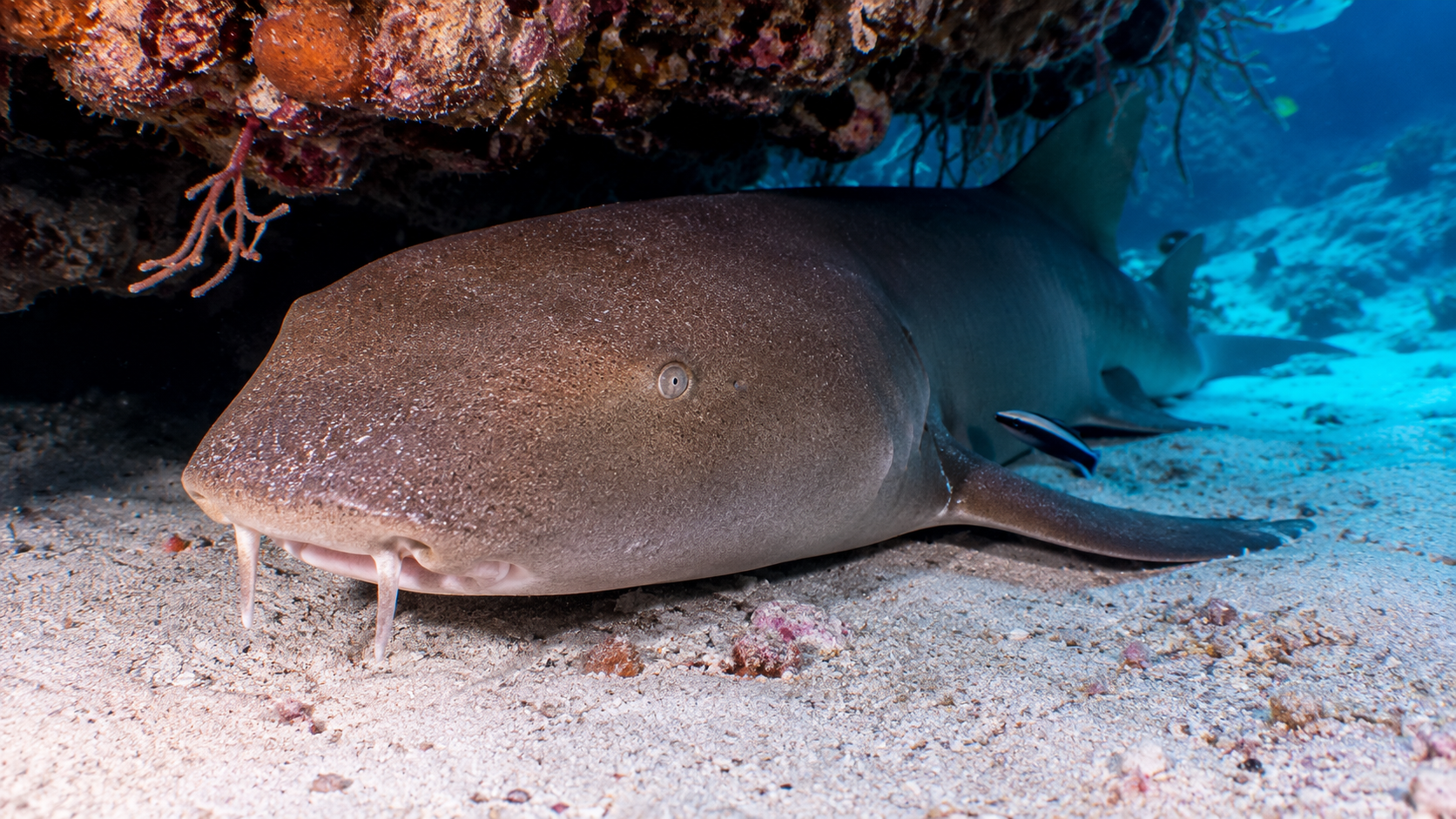 Sandy Shallows
Nurse Shark
Ginglymostoma cirratum
Sandy Reef Floors
Sedentary bottom-dwellers often seen piled together beneath reef overhangs. Their barbels probe the sand for crustaceans with slow, deliberate patience.
Vulnerable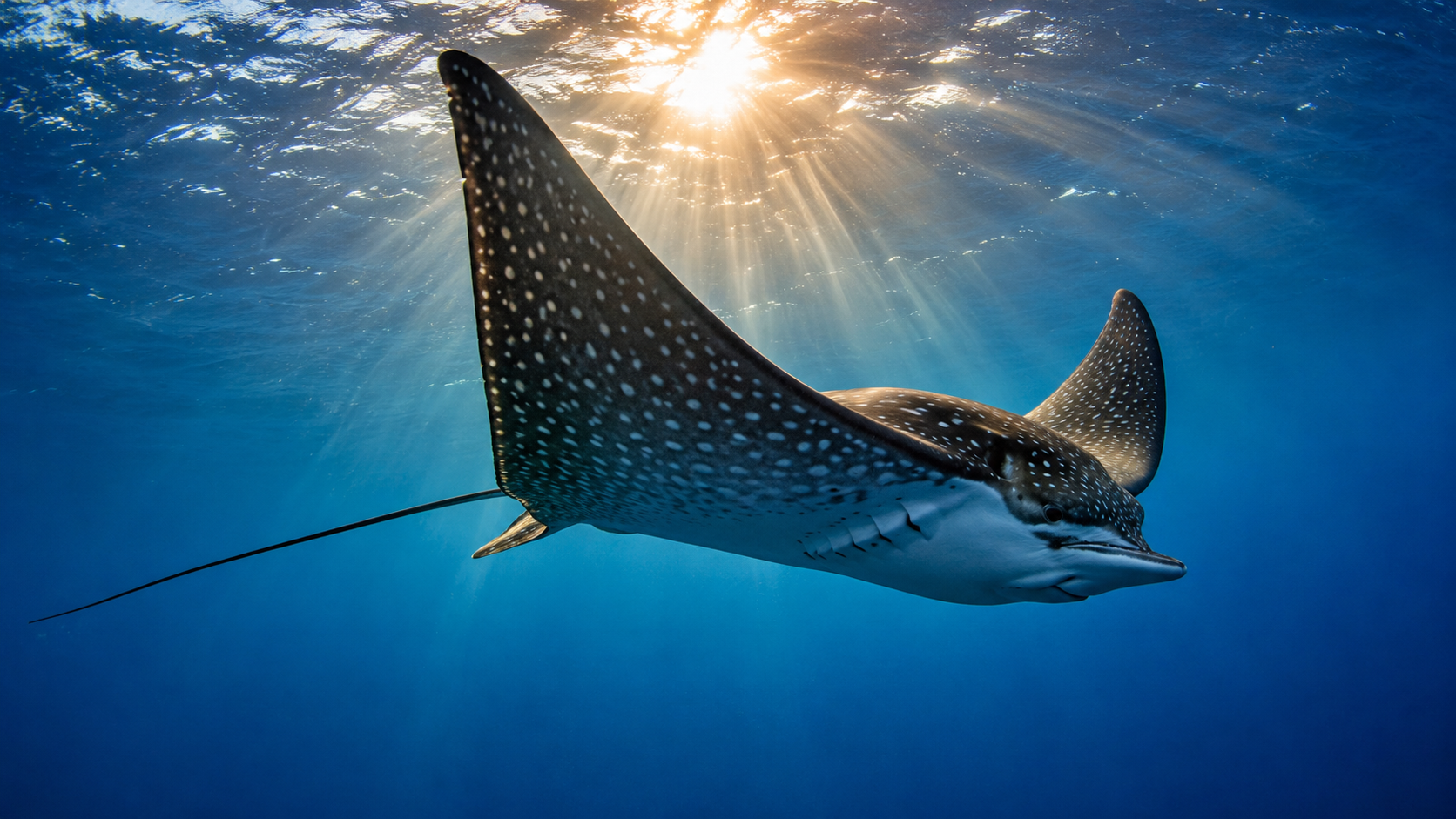 Sandy Shallows
Spotted Eagle Ray
Aetobatus narinari
Sandy Flats · Open Water
Constellations made flesh—their white-spotted backs mirror a night sky as they glide over sandy seabeds. One of the most breathtaking encounters in these waters.
Endangered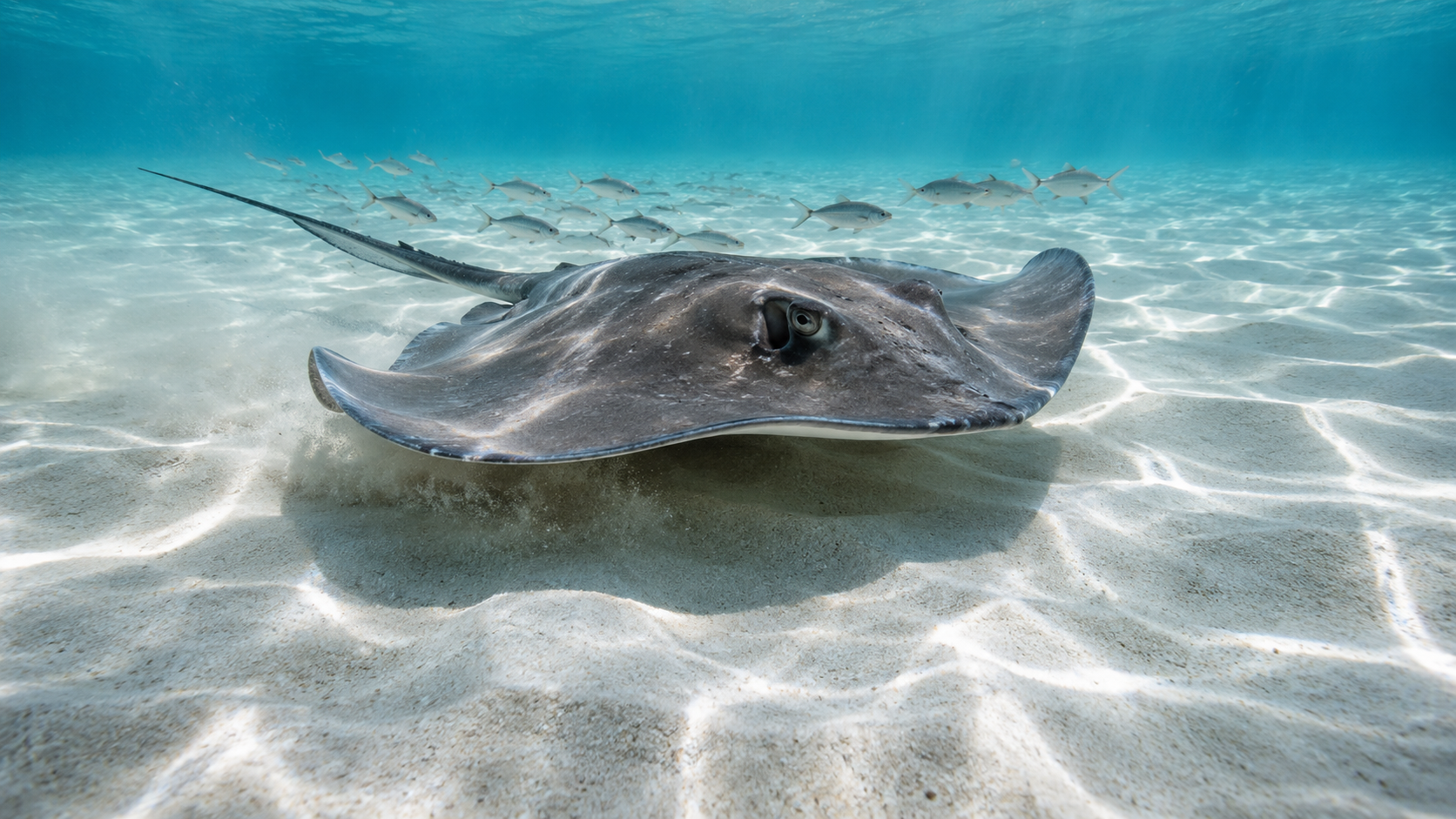 Sandy Flats
Southern Stingray
Hypanus americanus
Sandy Flats · Seagrass
Masters of camouflage who bury themselves in sand between seagrass meadows. Their diamond-shaped silhouette gliding overhead is one of the most meditative reef encounters.
Least Concern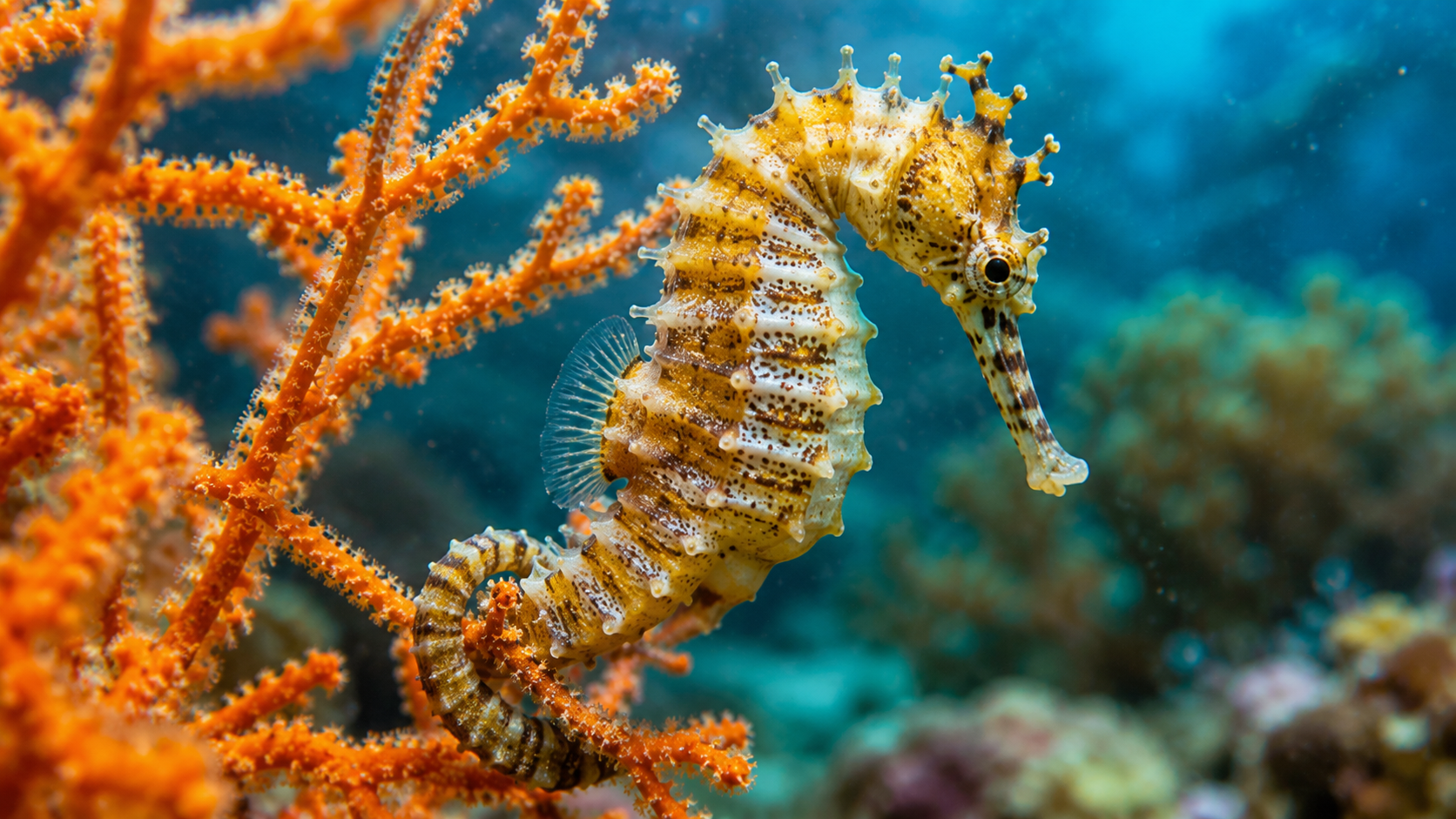 Seagrass Beds
Lined Seahorse
Hippocampus erectus
Seagrass · Coral Rubble
Tiny miracles clinging to seagrass blades with prehensile tails. The male carries and births the young—up to 1,500 at a time. Among the sea's most devoted parents.
Vulnerable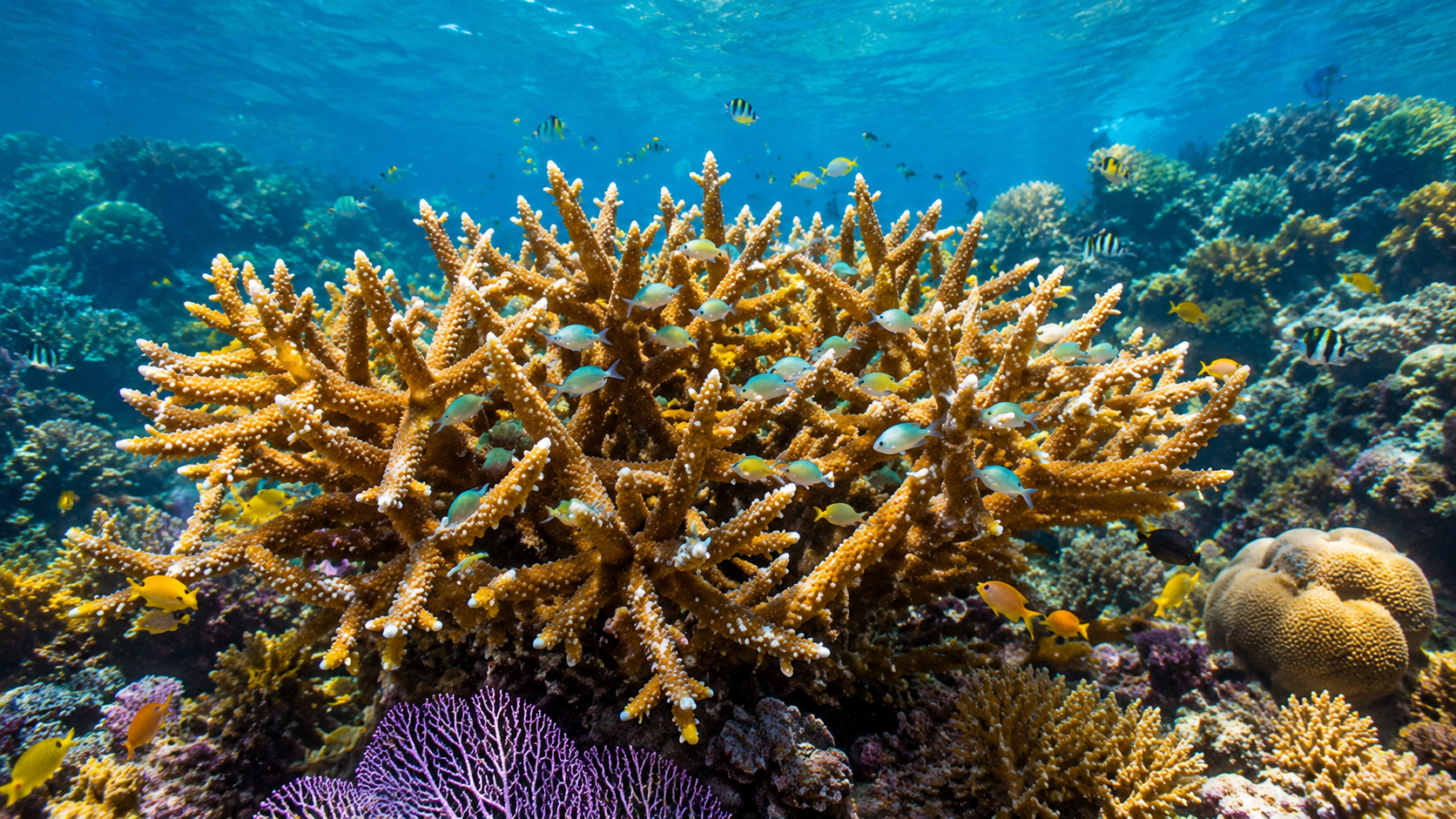 Reef Foundation
Staghorn Coral
Acropora cervicornis
Shallow Reef · Zapatilla Cays
Fast-growing branching corals that form the architectural backbone of the reef—a cathedral built over millennia, among the most important coral species in the Caribbean.
Critically Endangered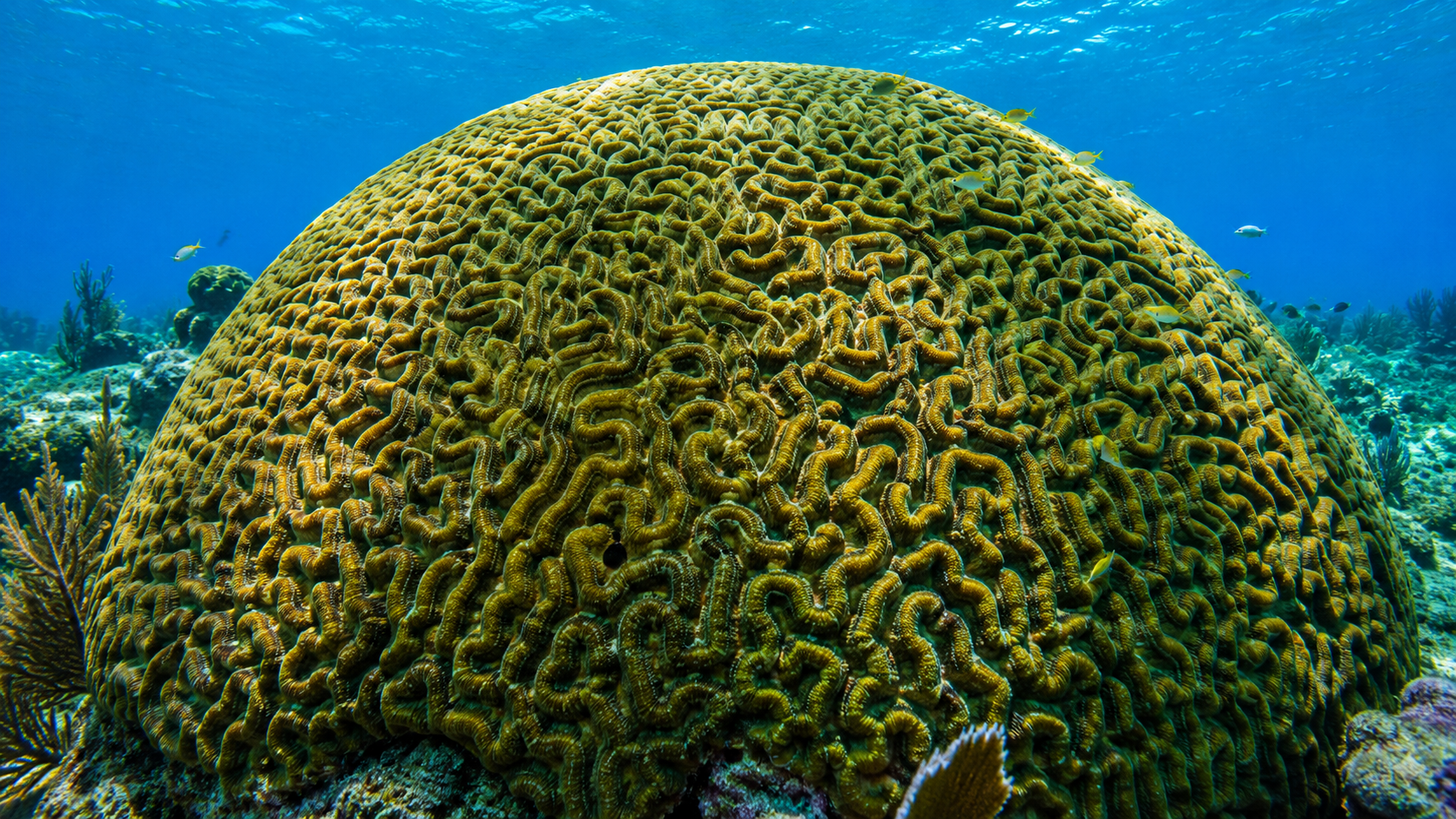 Reef Elder · 900 Yrs
Brain Coral
Diploria labyrinthiformis
Reef Slopes
Dome-shaped elders of the reef whose convoluted surface resembles a mind frozen in contemplation. Some colonies are over 900 years old—silent witnesses to the history of the archipelago.
Least Concern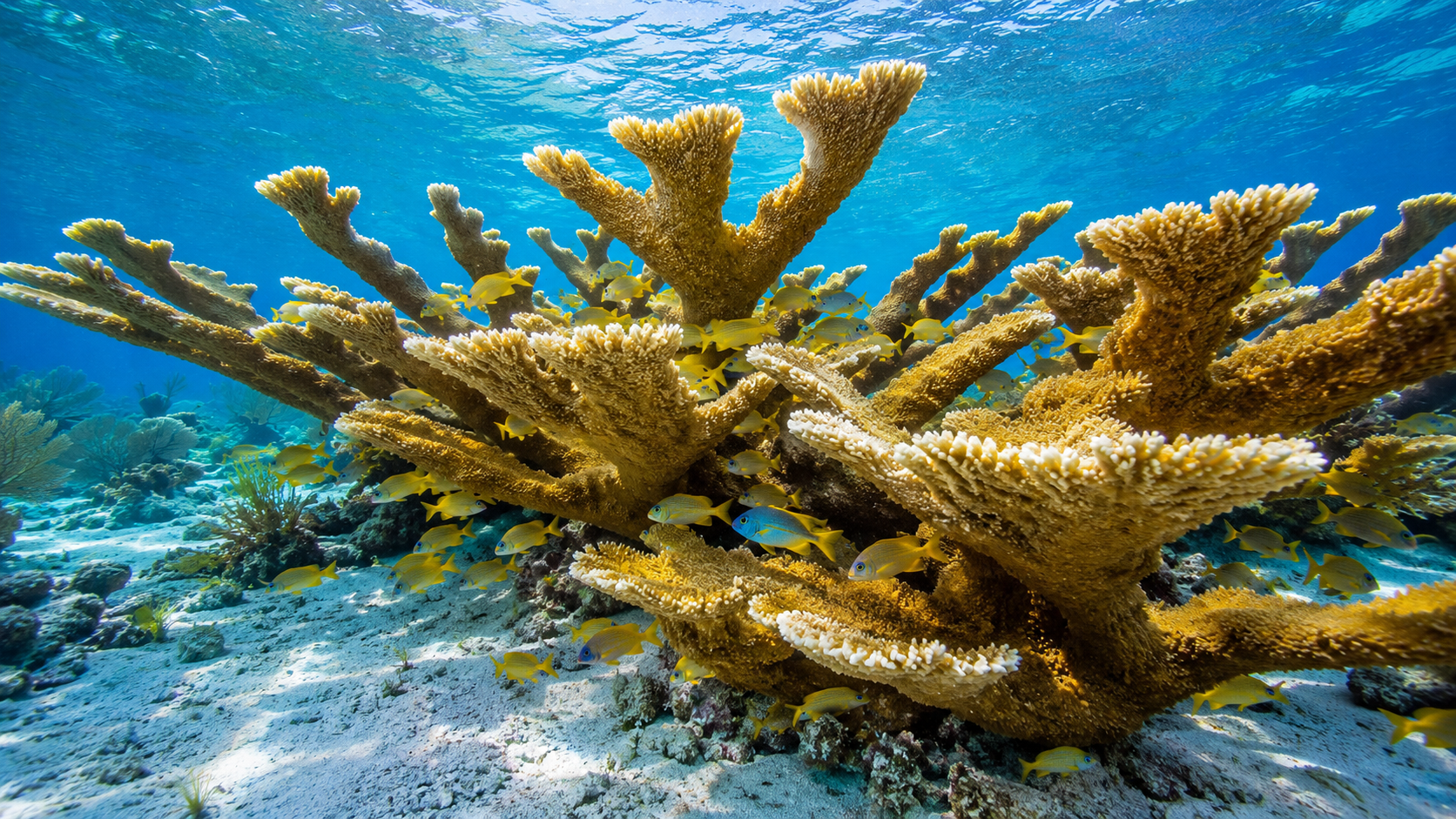 Dominant Shallow Coral
Elkhorn Coral
Acropora palmata
Shallow Reef · Wave Zone
The dominant coral of Bocas's shallow reefs—its antler-like branches create surge zones teeming with juvenile fish.
Critically Endangered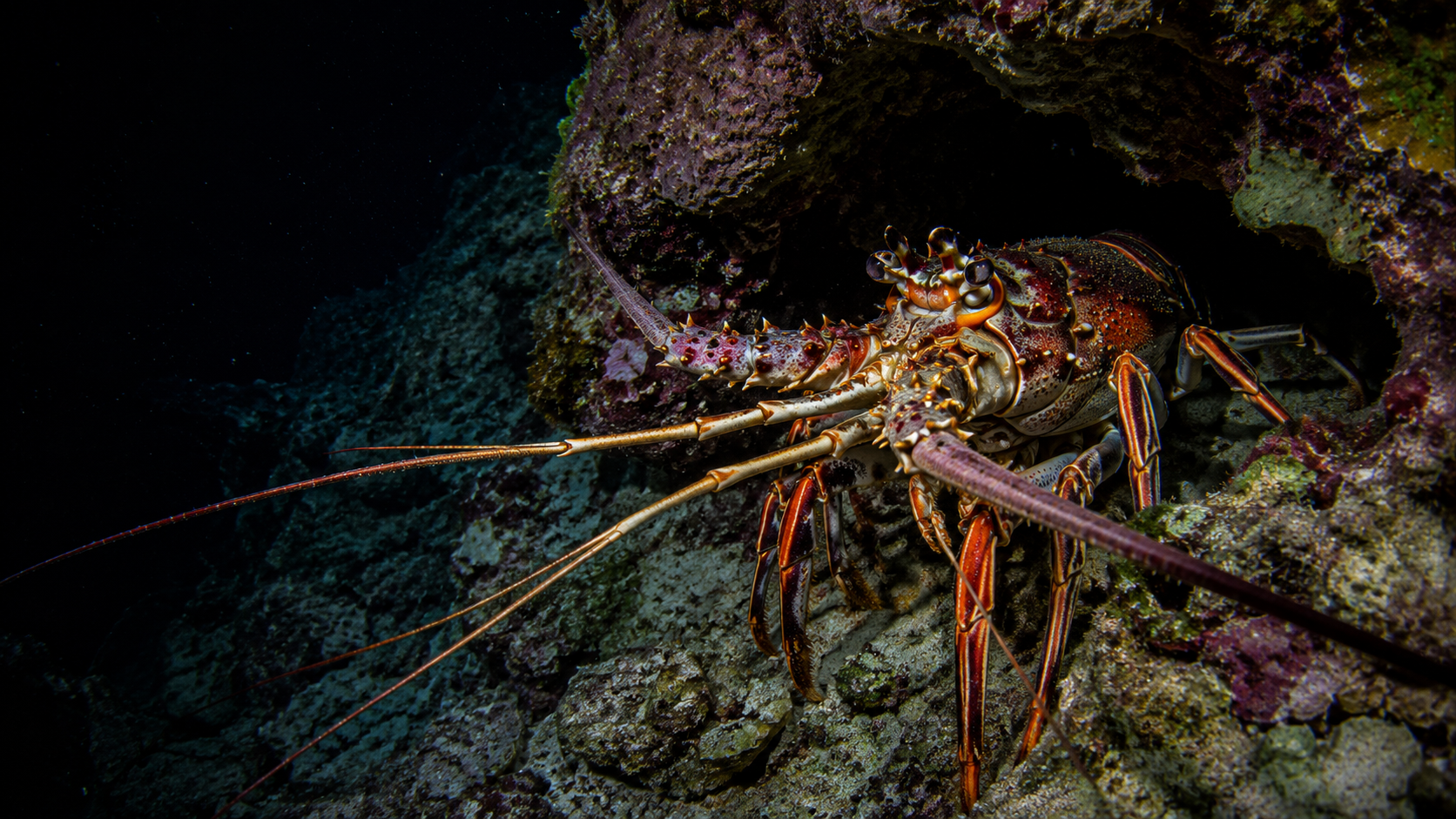 Night Migrations
Caribbean Spiny Lobster
Panulirus argus
Coral Reef Crevices
Architects of the night shift who migrate in single file across the seafloor—a mass movement unique to Caribbean waters, following chemical trails with antenna precision.
Least Concern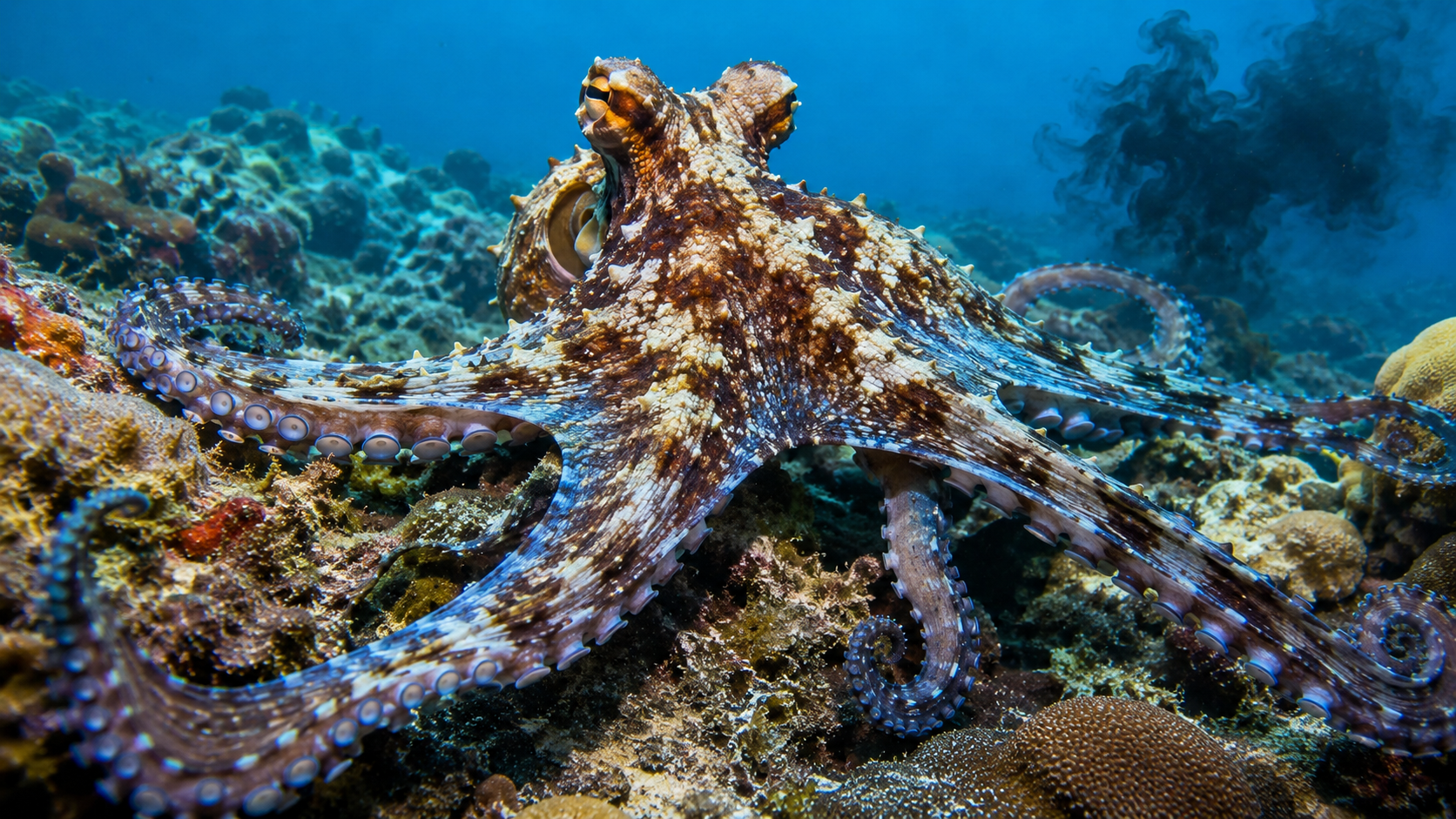 Master of Disguise
Caribbean Reef Octopus
Octopus briareus
Reef Rubble · Caves
Shape-shifting intelligence who change color and texture in milliseconds. Each maintains a reef den decorated with shells and crab claws—a homemaker, a hunter, a master of disguise.
Least Concern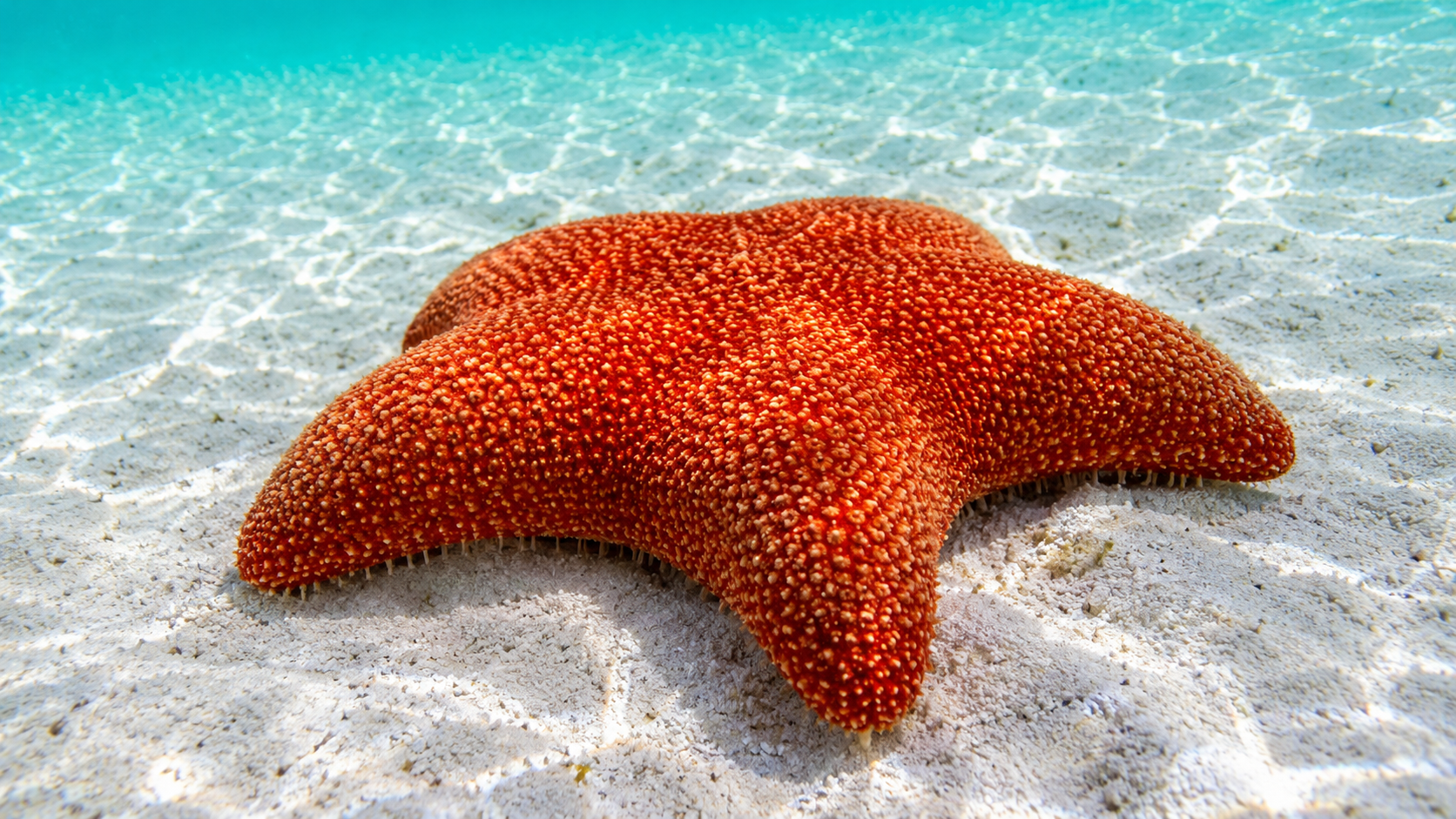 Seagrass Architect
Cushion Sea Star
Oreaster reticulatus
Sandy Flats · Seagrass
Slow-moving architects of the seabed whose pillowed forms dot the sandy shallows in brilliant orange and red. Their feeding keeps seagrass beds productive for the whole ecosystem.
Near Threatened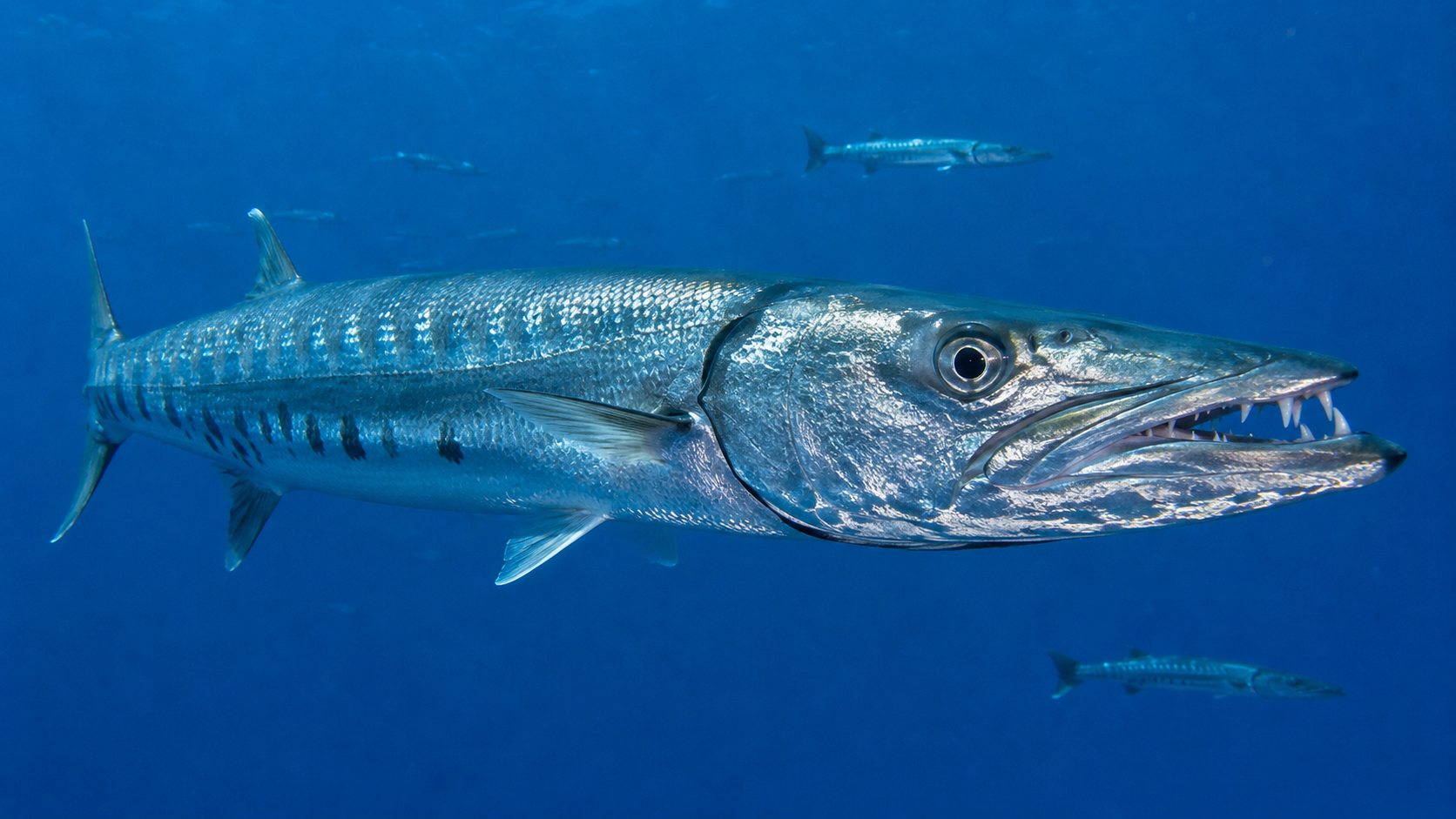 Apex Predator
Great Barracuda
Sphyraena barracuda
Open Reef · Channels
Apex predators who hover like silver torpedoes at the reef edge, watching everything. Their presence signals an intact, functioning trophic food web.
Least Concern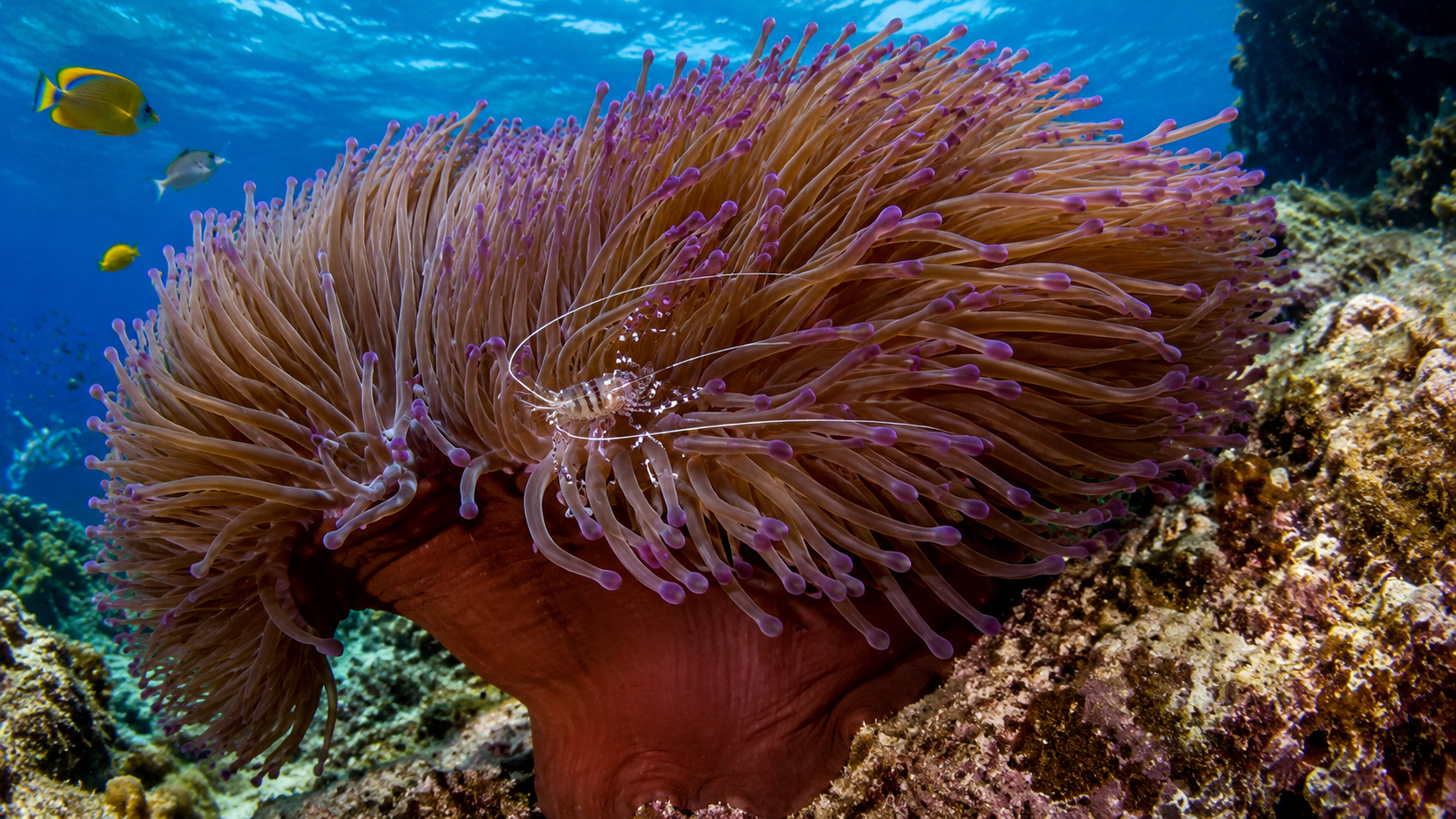 Symbiotic Host
Giant Caribbean Anemone
Condylactis gigantea
Reef · Rubble Fields
Anchored flowers of the reef floor whose stinging tentacles host symbiotic shrimp and fish. Their fluorescent purples and pinks are among the most vivid colors in the Caribbean.
Least Concern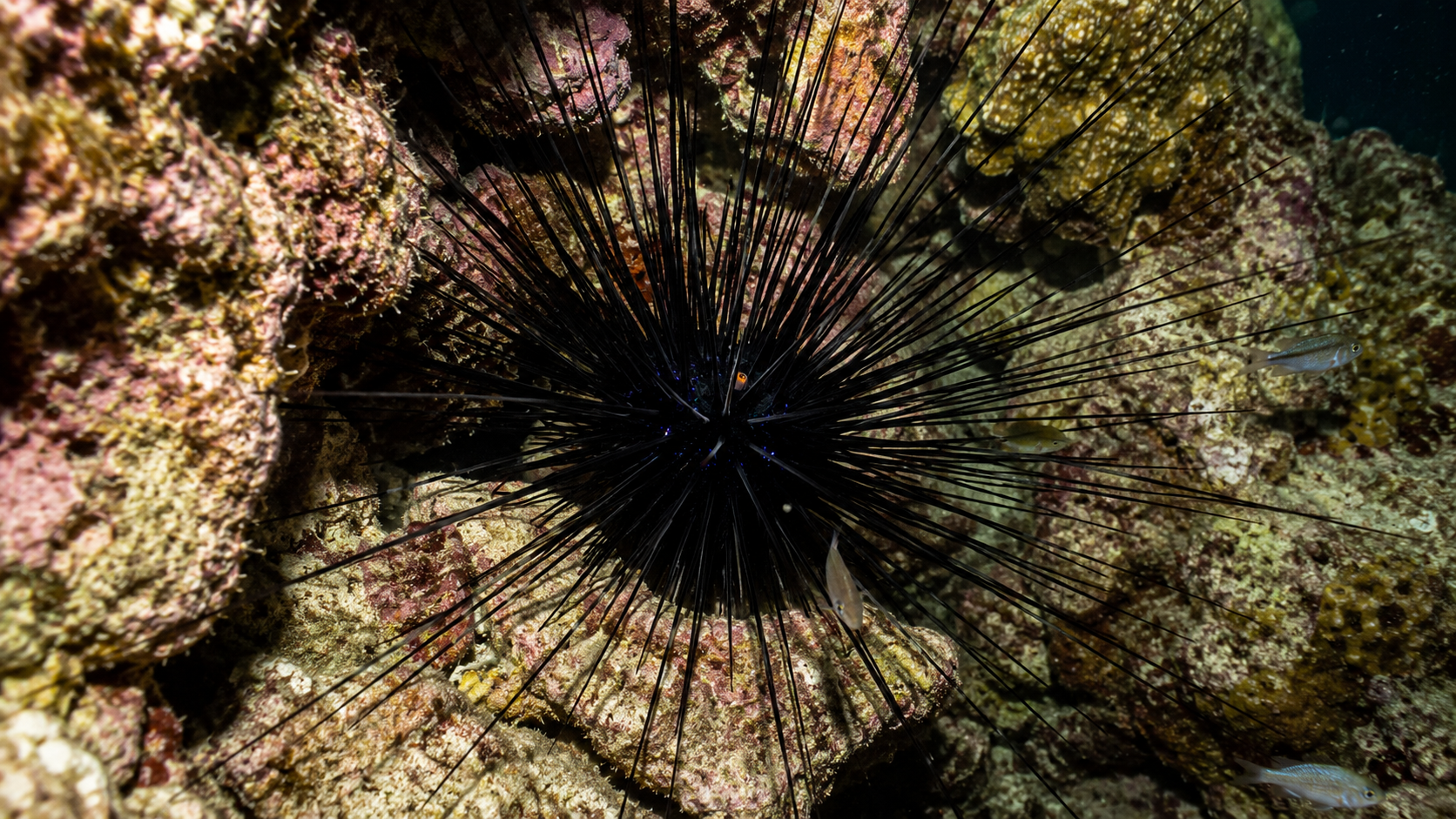 Reef Cleaner
Long-Spined Sea Urchin
Diadema antillarum
Reef · Rocky Intertidal
Slow-grazing reef cleaners whose long black spines keep algae from smothering coral. Their recovery across Bocas reefs is a celebrated conservation success story.
VulnerableThe canopy holds stories older than memory.
Bocas del Toro is called the Galápagos of Central America—8,000 years of island isolation have produced unique color morphs, endemic subspecies, and adaptations found nowhere else on Earth. A peninsula where kinkajou, capuchin, and poison-dart frog share a square mile.
 Canopy Resident
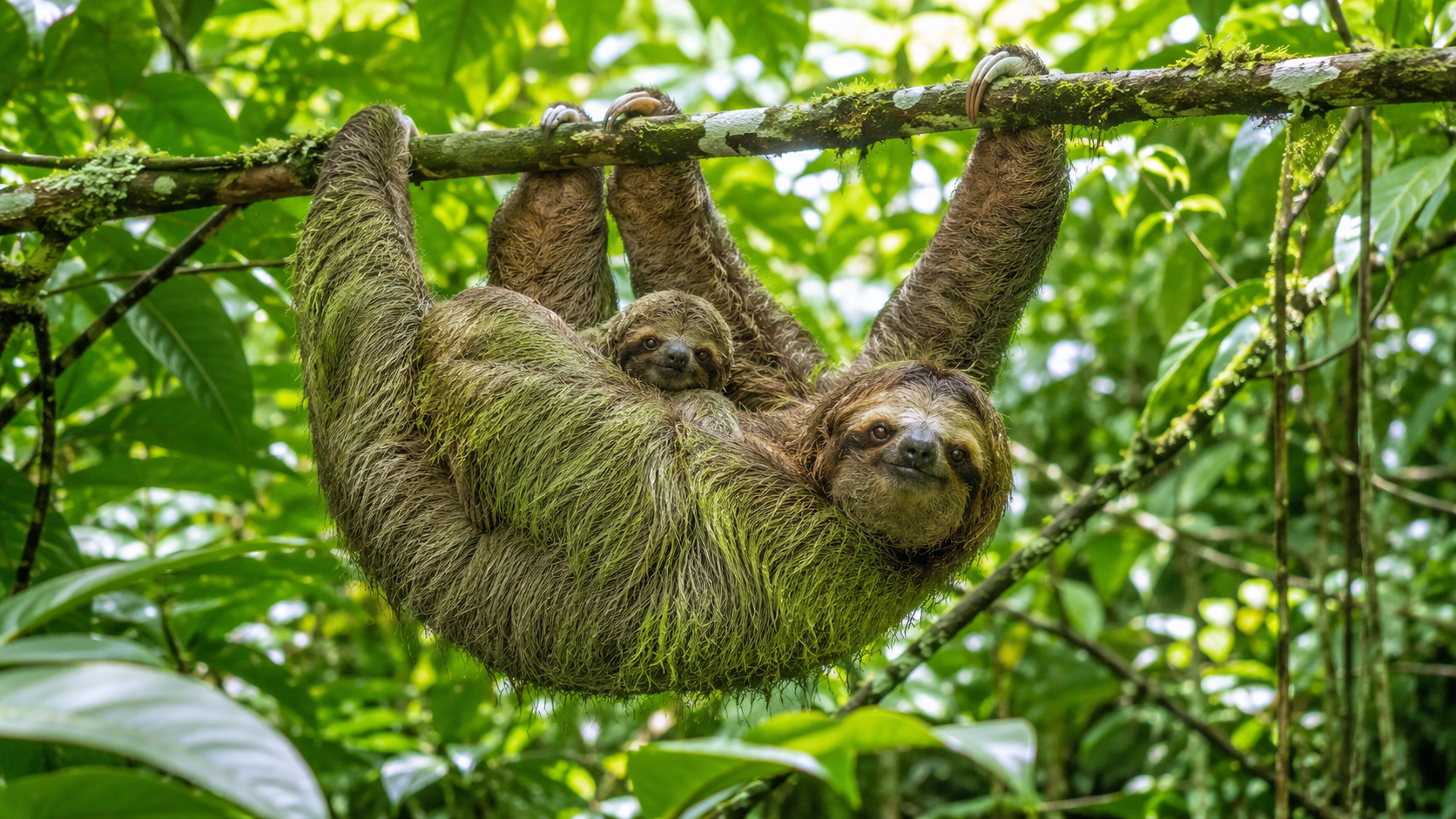
Three-Toed Sloth
Bradypus variegatus
Forest Canopy
Meditative masters of stillness whose unhurried relationship with time is a teaching in itself. Their algae-tinted fur creates a living ecosystem—moths, beetles, and fungi all call their coat home.
Least Concern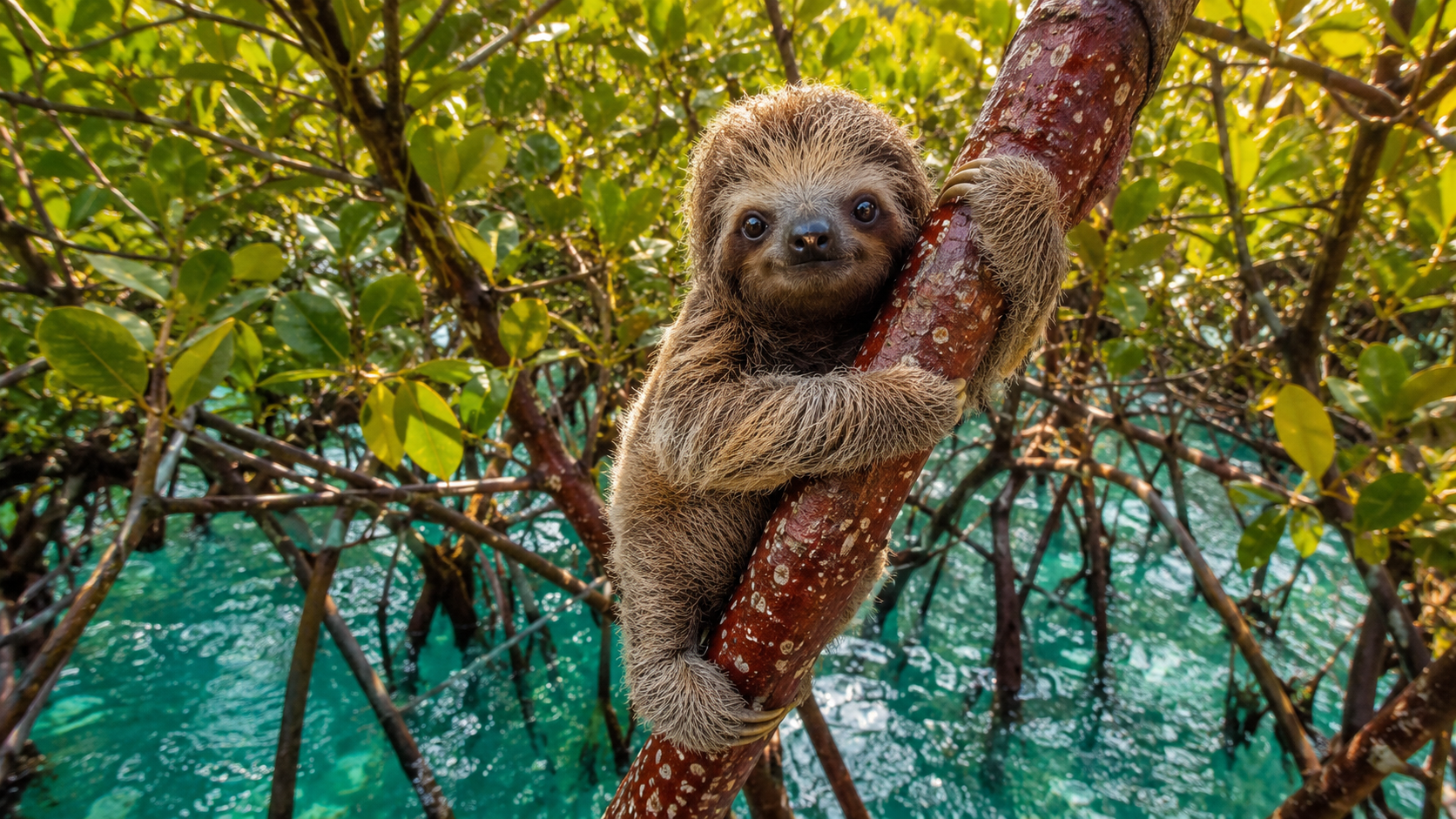 Endemic to Bocas del Toro
Pygmy Three-Toed Sloth
Bradypus pygmaeus
Mangrove Islands — Endemic
Found nowhere else on Earth—recognized as a distinct species only in 2001. Island isolation made them excellent swimmers, 20% smaller than mainland cousins. The entire world population lives in Bocas del Toro.
Critically Endangered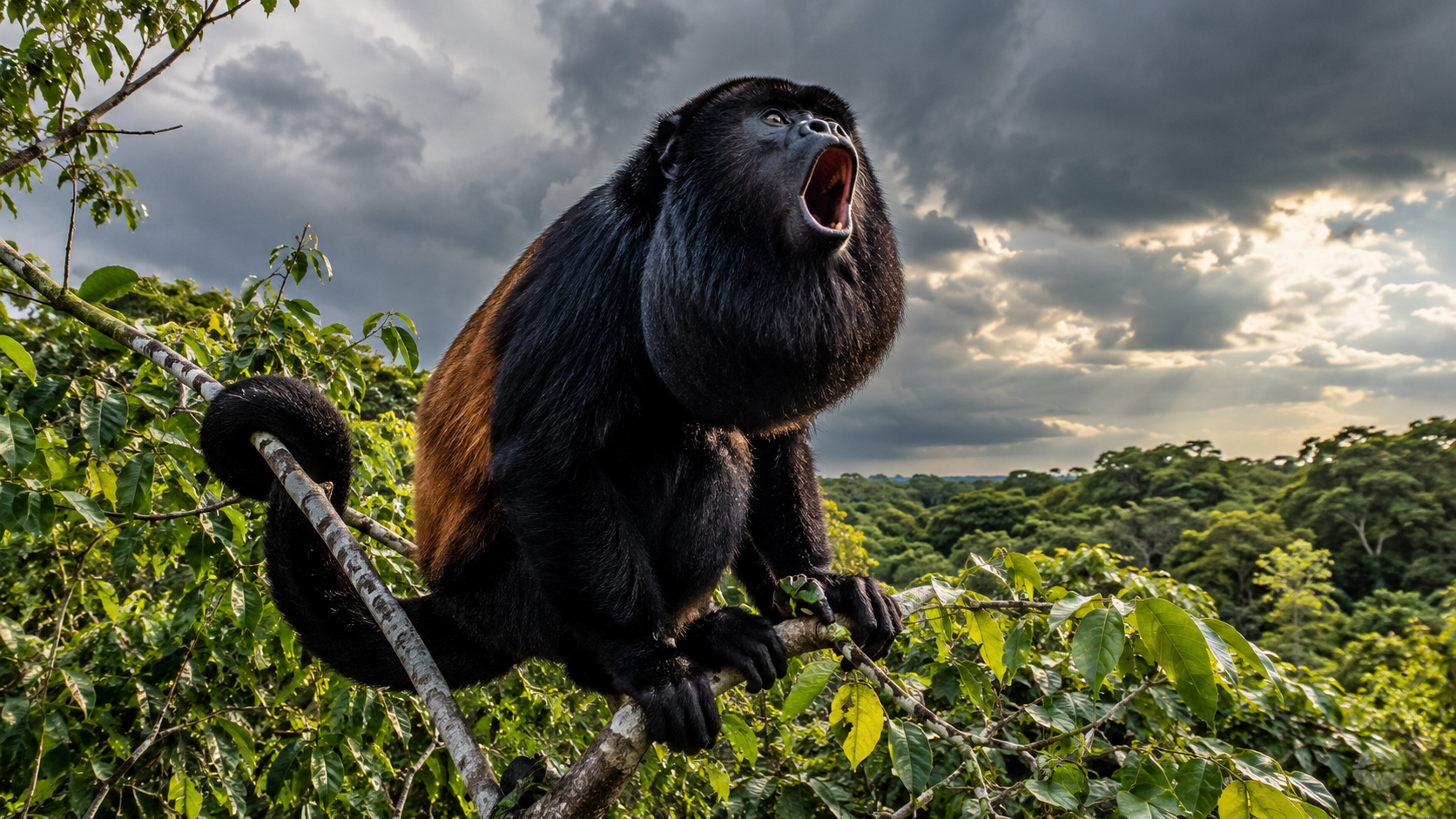 Dawn Chorus
Mantled Howler Monkey
Alouatta palliata
Forest Canopy
The resonant dawn chorus carries over two miles—the rainforest's alarm clock. Their calls establish territory without conflict: a sonic sovereignty over the canopy at first light.
Vulnerable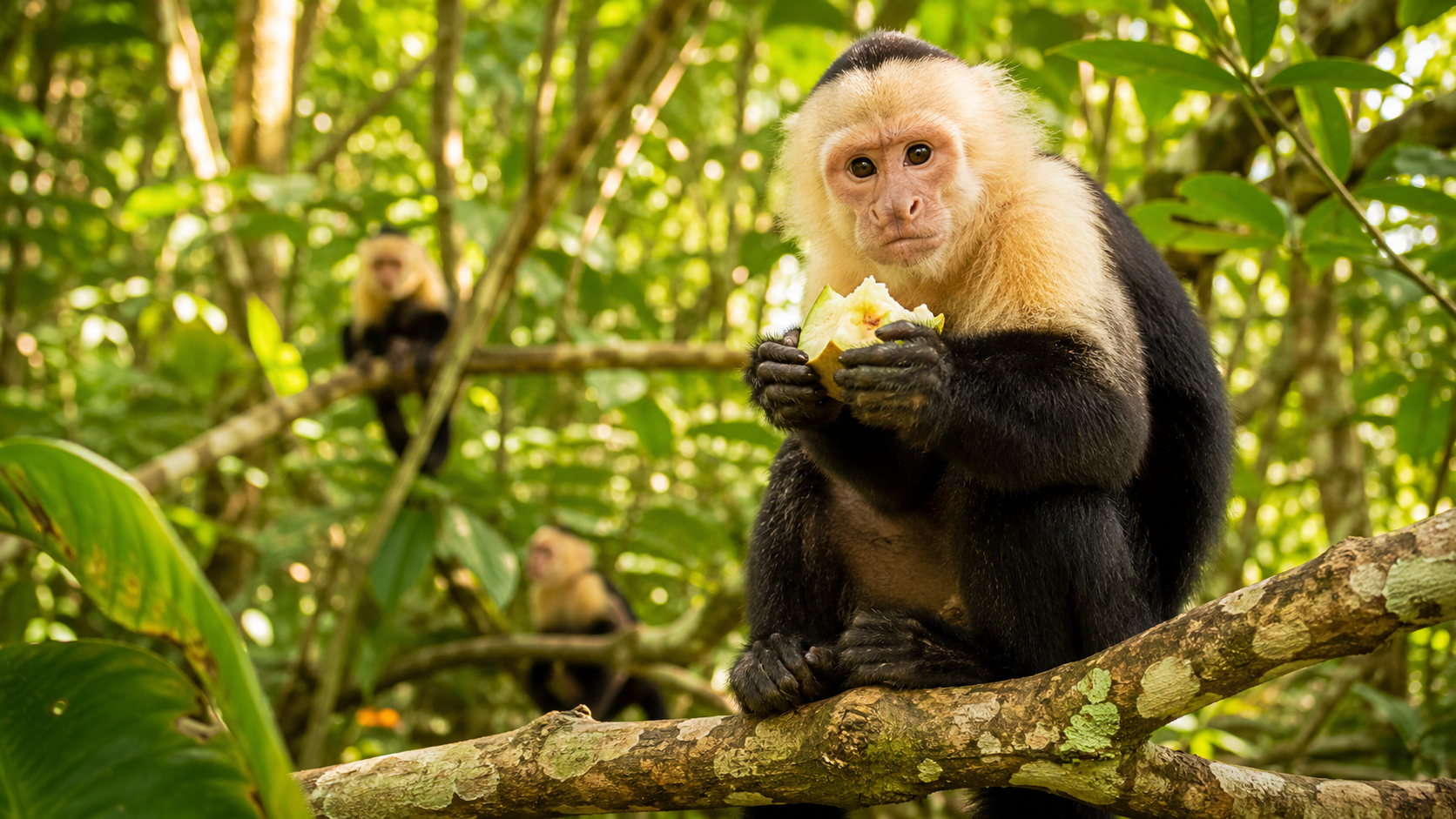 Tool-Using Primate
White-Faced Capuchin
Cebus capucinus
Multi-Story Forest
Among the most cognitively advanced New World primates—tool users, problem-solvers, intensely curious. Abundant in Bocas's low raphia palm forests allowing superb observation.
Least Concern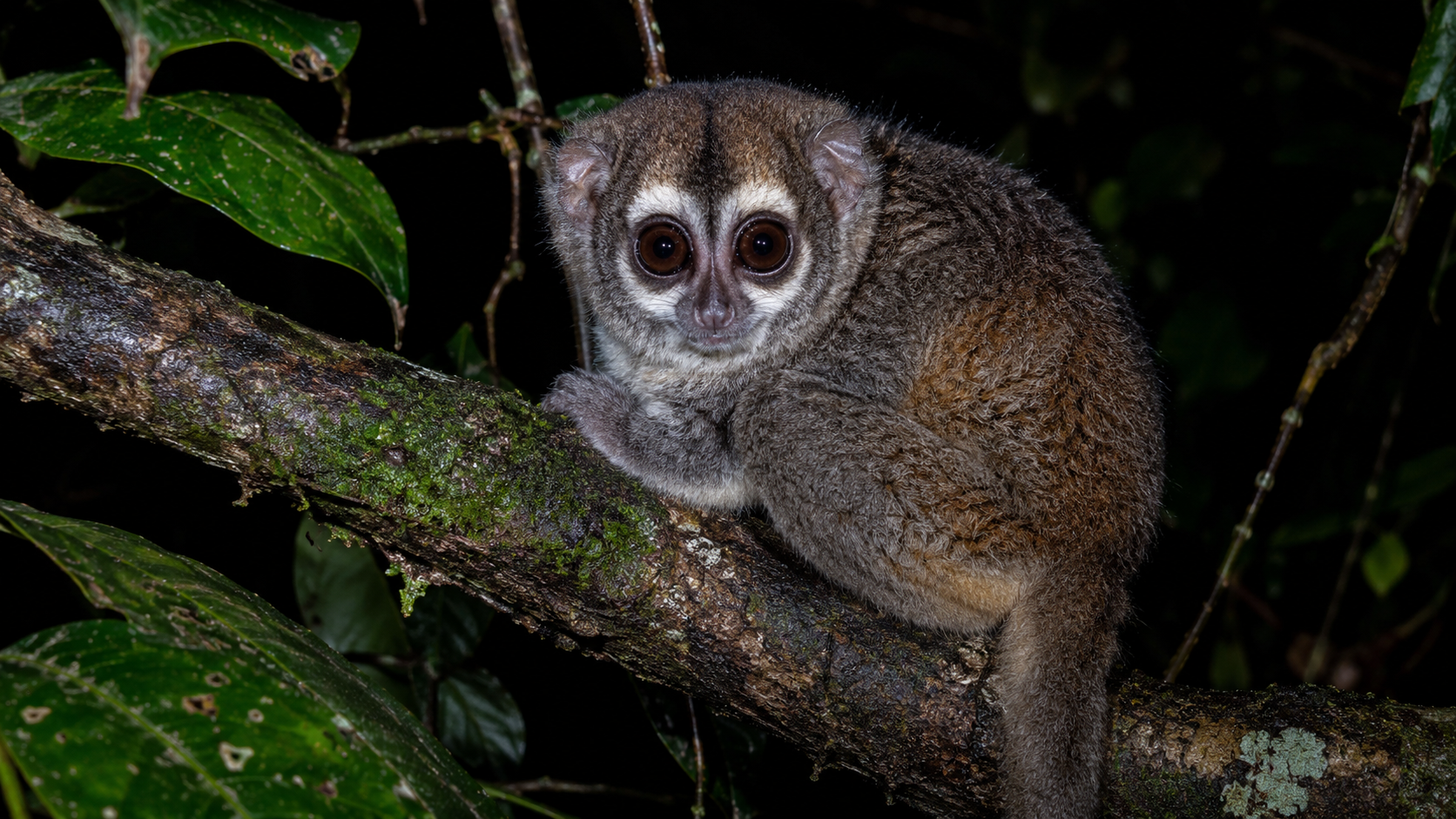 Nocturnal
Panamanian Night Monkey
Aotus zonalis
Tree Hollows · Night Forest
The only truly nocturnal monkey in the Americas, with enormous owl-like eyes tuned to moonlit canopies. Family groups sleep curled together in tree hollows by day.
Least Concern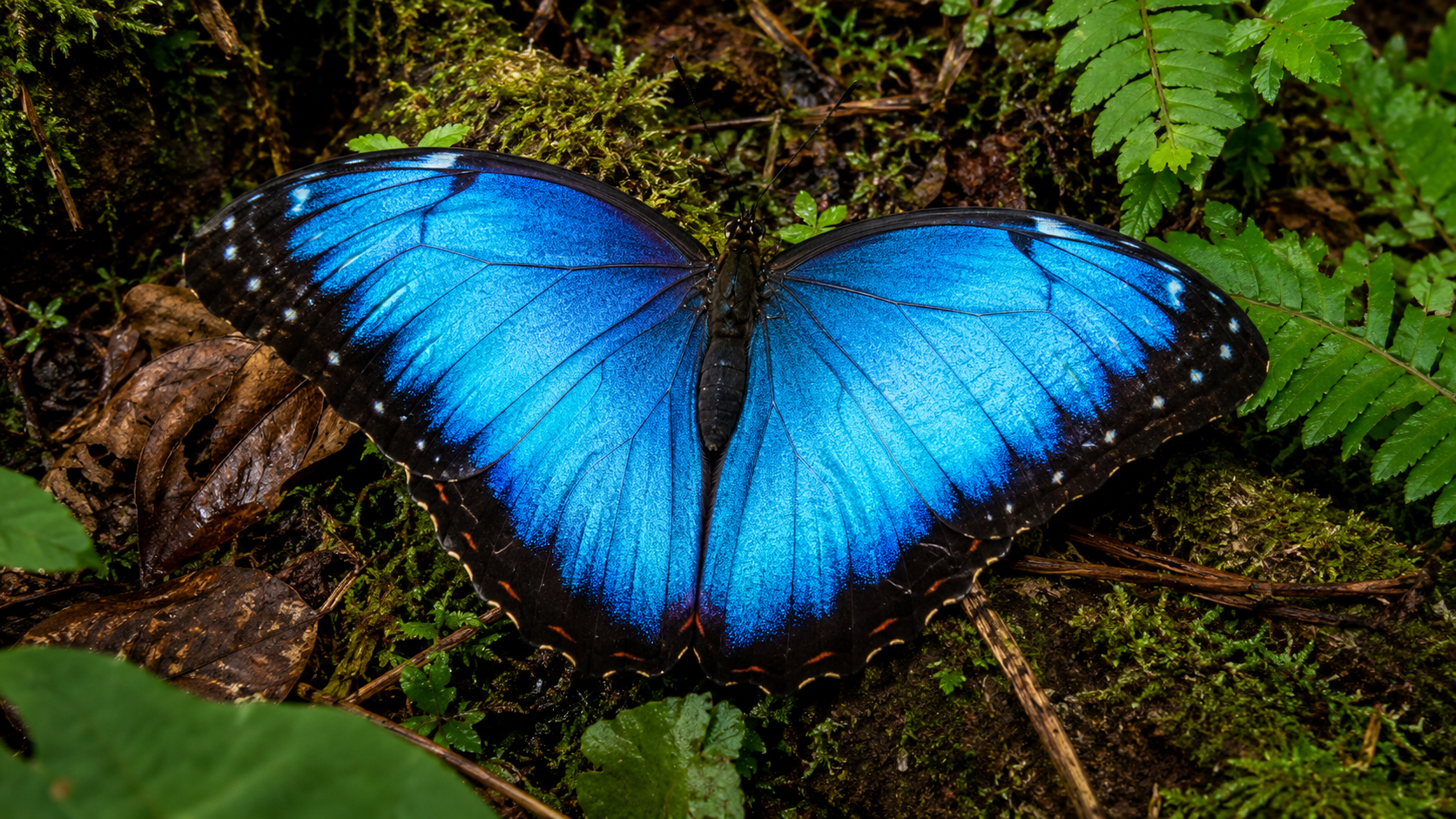 Most Vivid Blue · 20cm
Giant Blue Morpho
Morpho cypris
Forest Edge · Streams · Canopy
The most intensely blue of all morpho butterflies—a wingspan up to 20 cm of pure blazing iridescence. The blue contains no pigment; it is pure structural light, each wingbeat a flash of refracted sky.
Not Evaluated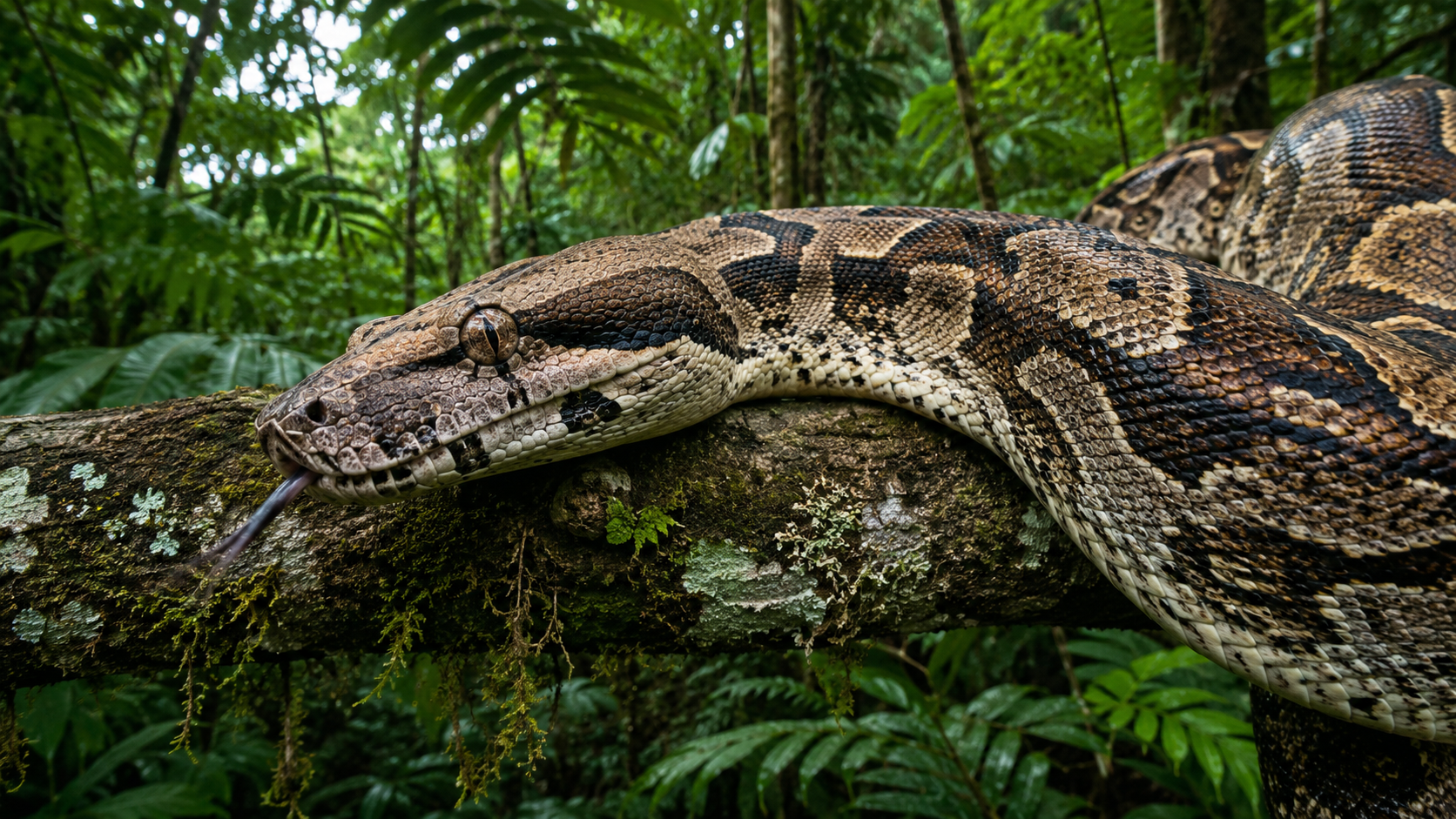 Ambush Sovereign
Boa Constrictor
Boa constrictor
Forest Floor · Canopy Edge
Ambush sovereigns of the forest floor who sense heat signatures and regulate prey populations with ancestral efficiency. Non-venomous, patient, and woven into the undergrowth's fabric.
Least Concern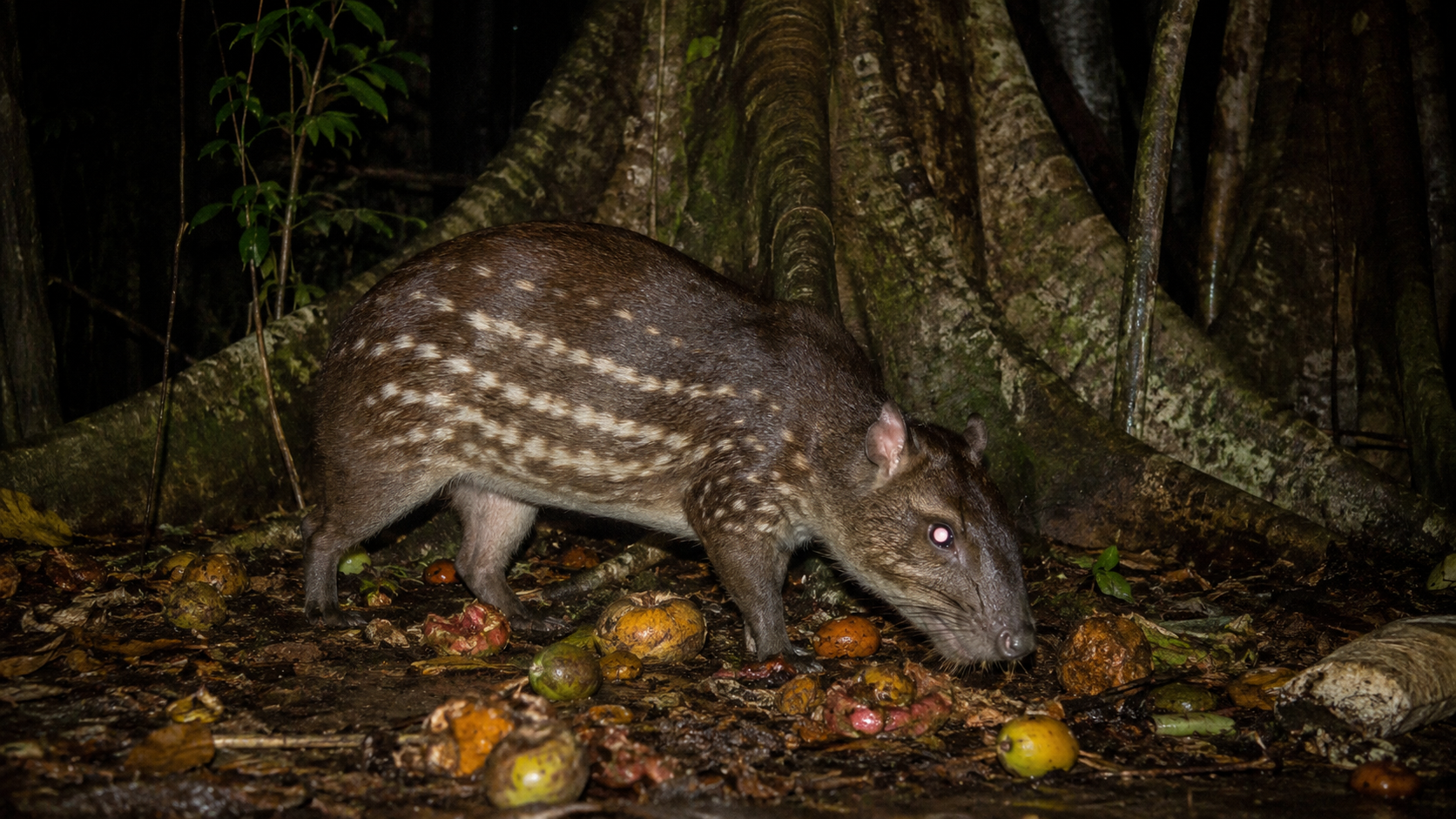 Forest Gardener
Paca
Cuniculus paca
Forest Floor · Riverbanks
Spotted nocturnal rodents and key seed dispersers who bury seeds and forget them—planting the next generation of trees. Their spotted coats vanish completely in dappled moonlight.
Least Concern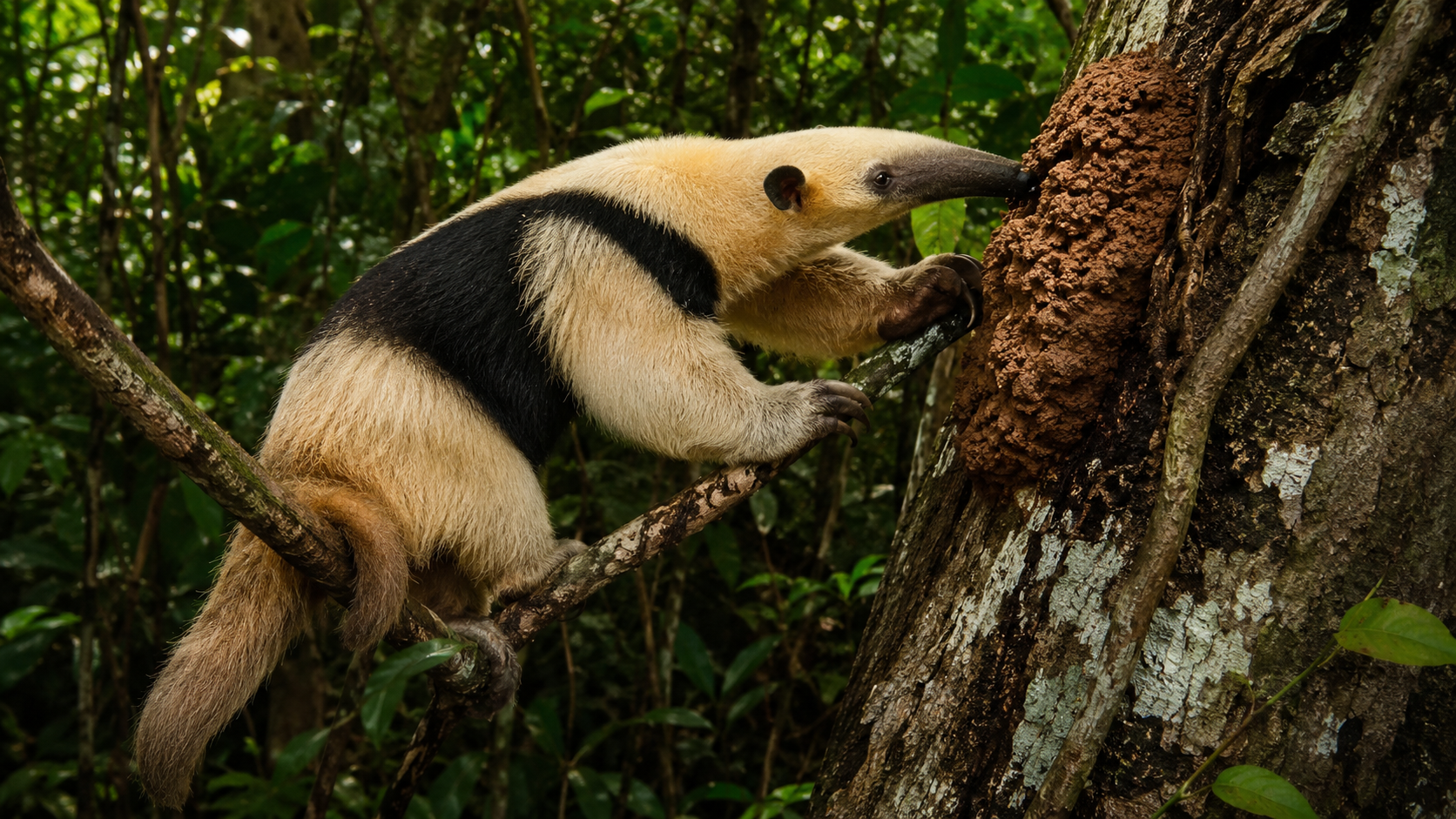 Insect Architect
Northern Tamandua
Tamandua mexicana
Forest Floor · Canopy
Long-tongued engineers whose powerful claws tear open termite mounds and ant colonies. Equally at home on the ground and in the canopy—they patrol both realms with equal ease.
Least Concern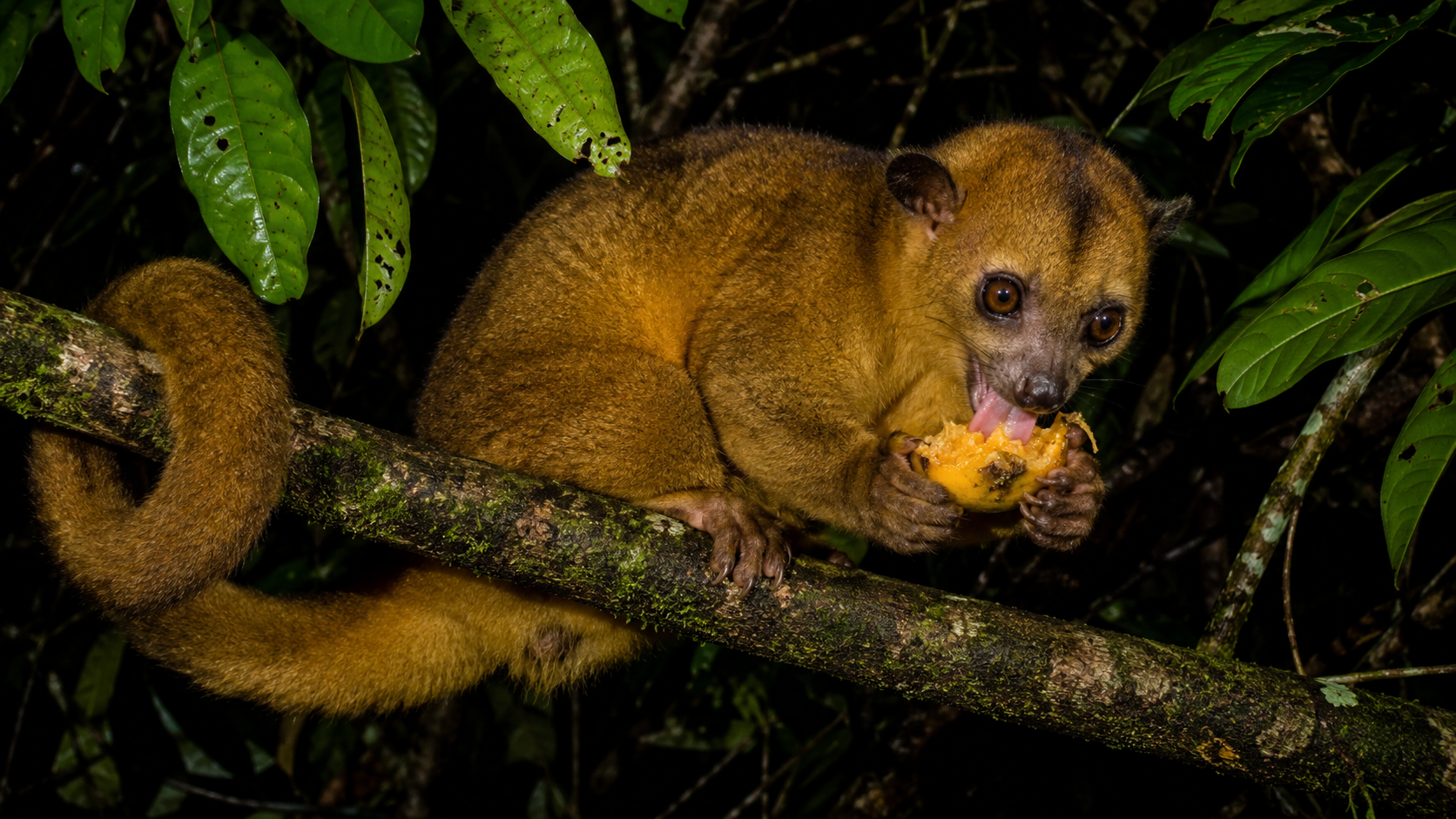 Canopy Pollinator
Kinkajou
Potos flavus
Forest Canopy · Night
Honey bears of the night canopy—their long tongues probe flowers for nectar, making them crucial pollinators. Prehensile tails anchor them in the crown while they feed by moonlight.
Least Concern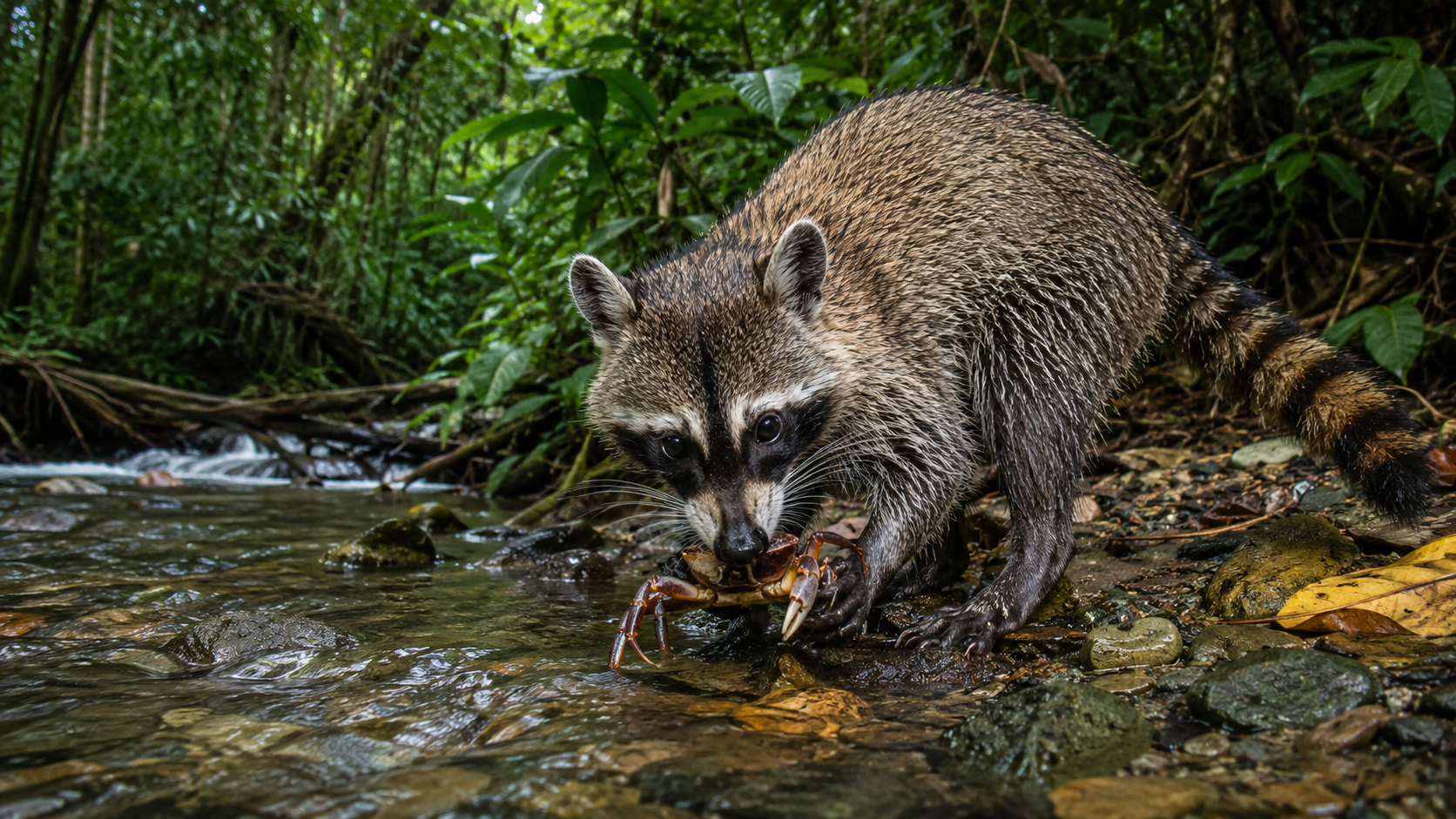 Mapachi
Crab-Eating Raccoon
Procyon cancrivorus
Mangrove · Shoreline · Forest
The mapachi of Bocas del Toro—an opportunistic forager who patrols mangrove edges and stream banks for crabs, fish, and fruit. Among the most often-seen mammals on the peninsula.
Least Concern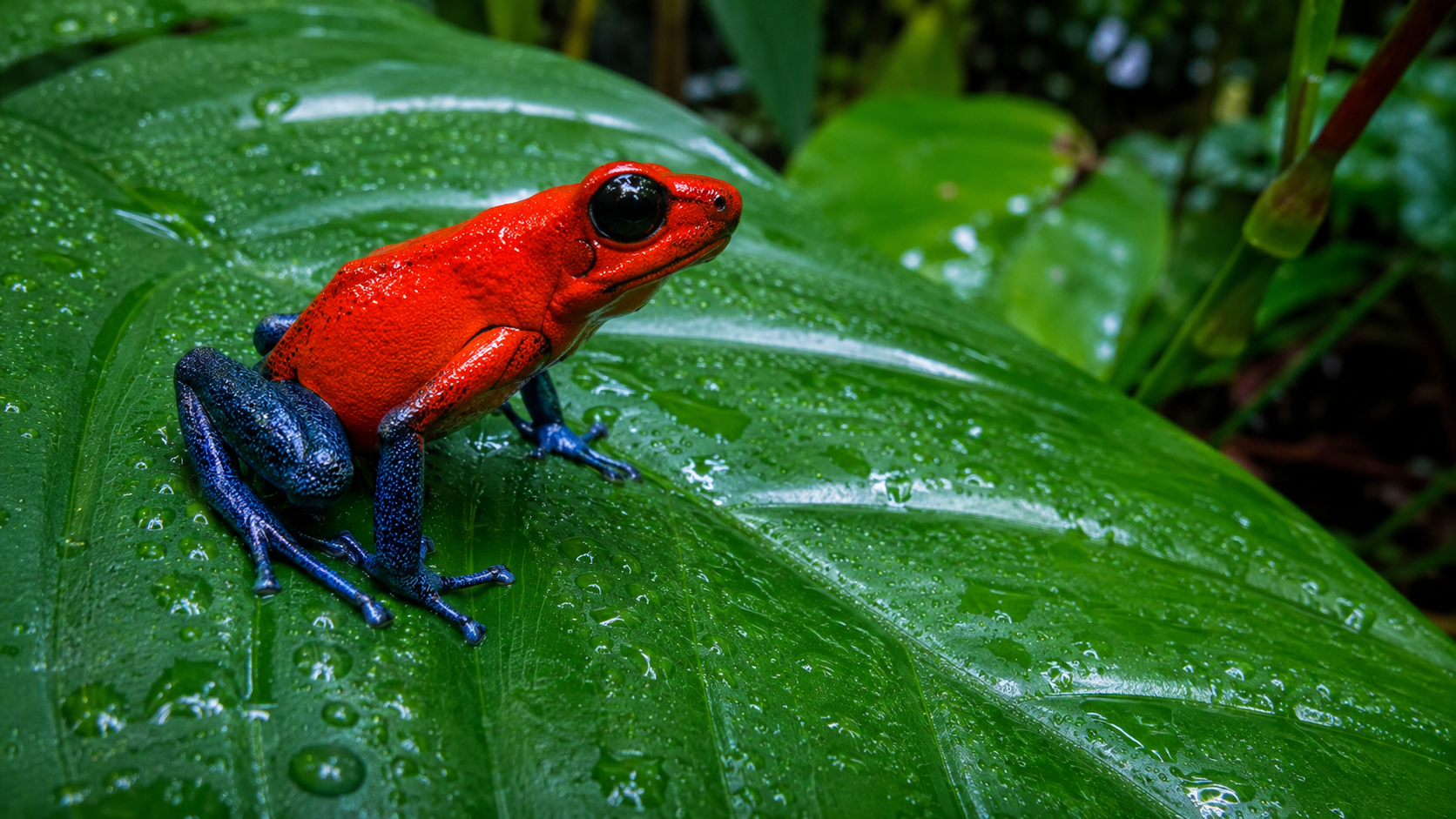 Island Color Morph
Strawberry Poison-Dart Frog
Oophaga pumilio
Forest Floor · Leaf Litter
On San Cristóbal, this species displays lime green with black spots—an island-specific morph found only here. The reason Bocas del Toro is called the Galápagos of Central America.
Least Concern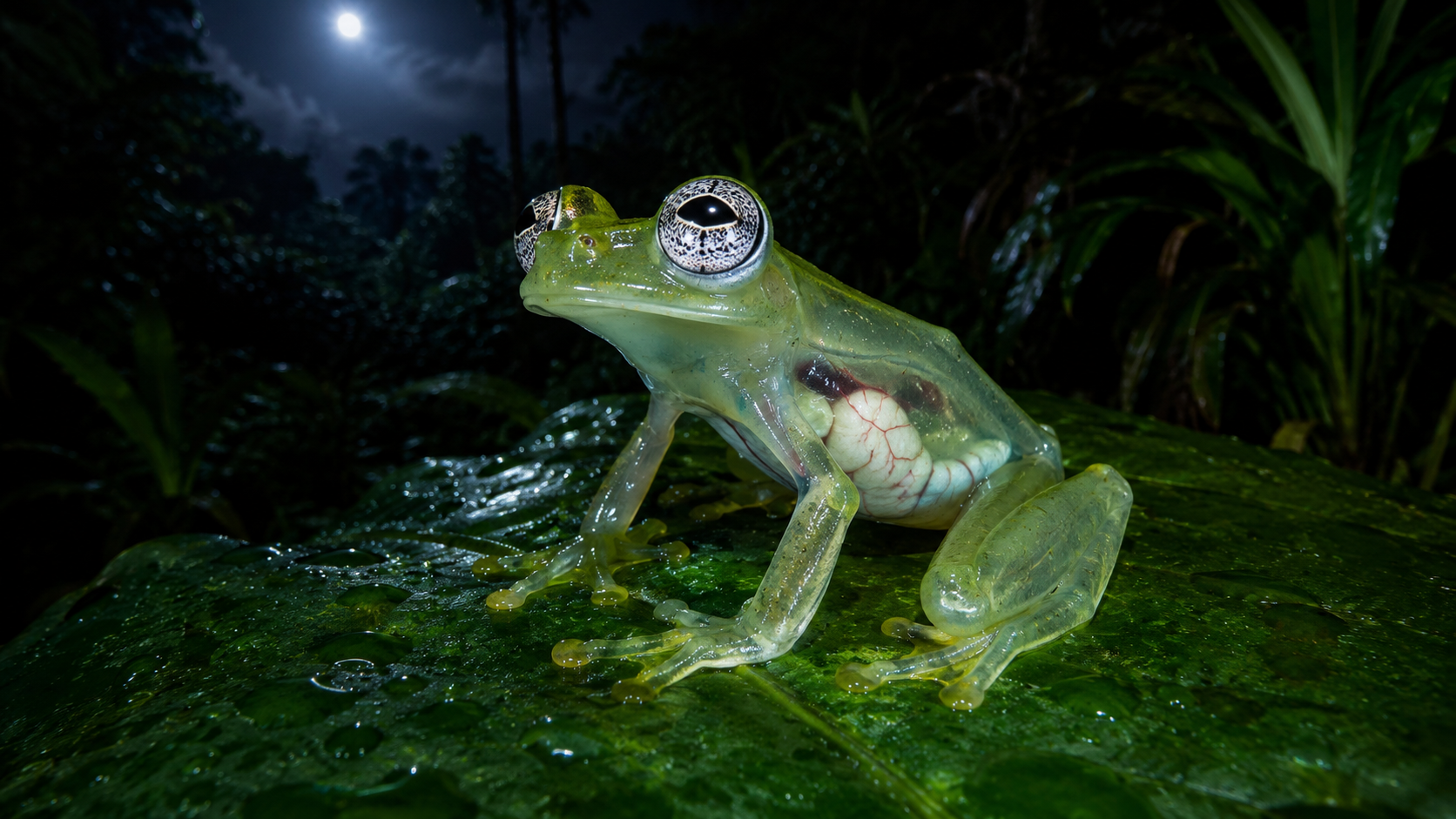 Transparent Wonder
Glass Frog
Centrolenidae sp.
Stream-Side Vegetation
Translucent miracles whose transparent bellies reveal beating hearts and golden eggs. They lay eggs on leaves overhanging streams so hatching tadpoles drop directly into the water below.
Varies778 species fill the sky above this peninsula.
Bocas del Toro hosts one of Central America's most important bird regions—778 species documented, including multiple parrot and macaw species, trogons, manakins, and globally endangered bellbirds.
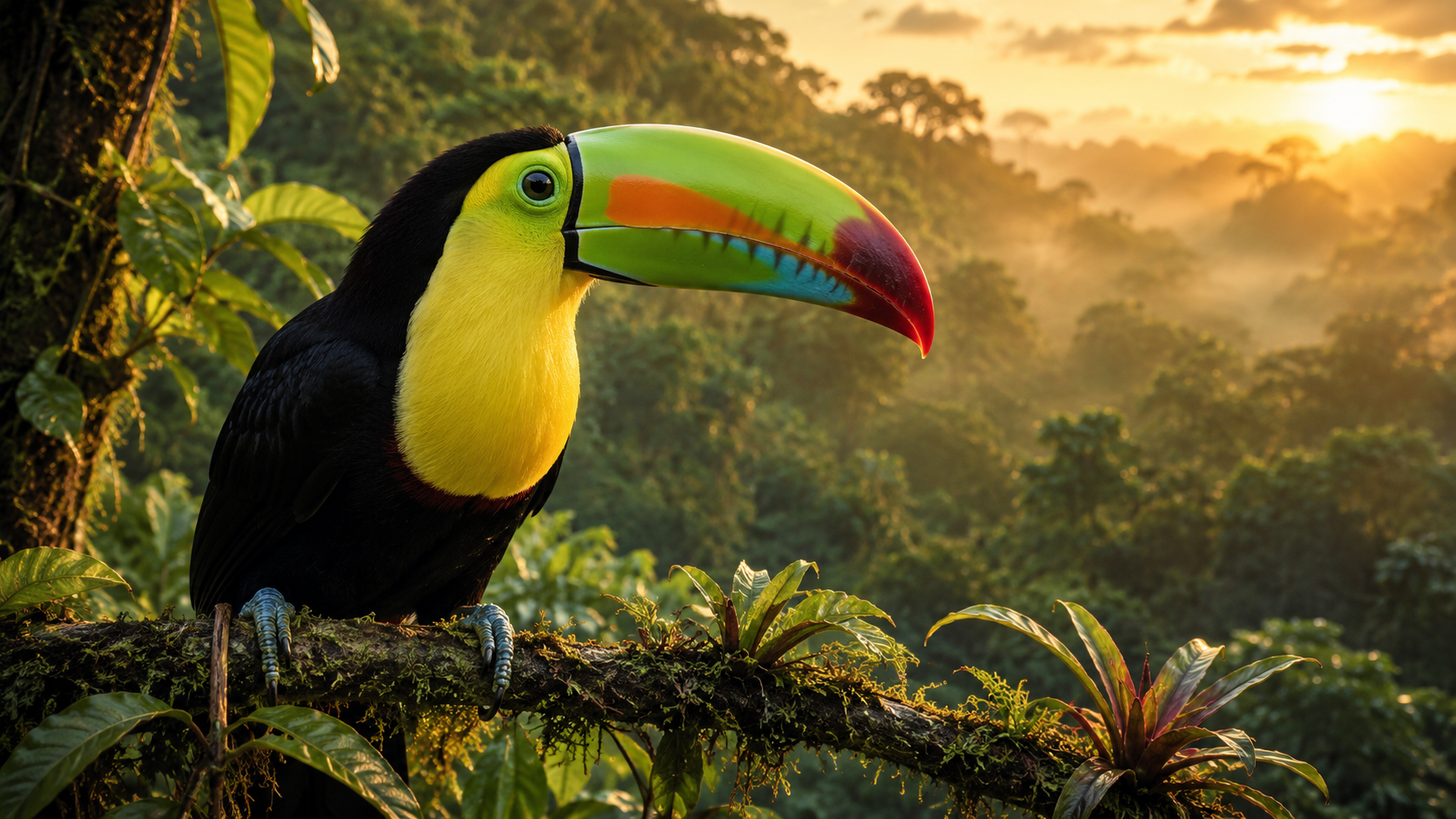 Seed Disperser
Keel-Billed Toucan
Ramphastos sulfuratus
Forest Edge · Canopy
The living emblem of the tropics—their improbable rainbow bills are lightweight honeycomb bone. Vital seed dispersers; without them, certain forest trees cannot reproduce.
Least Concern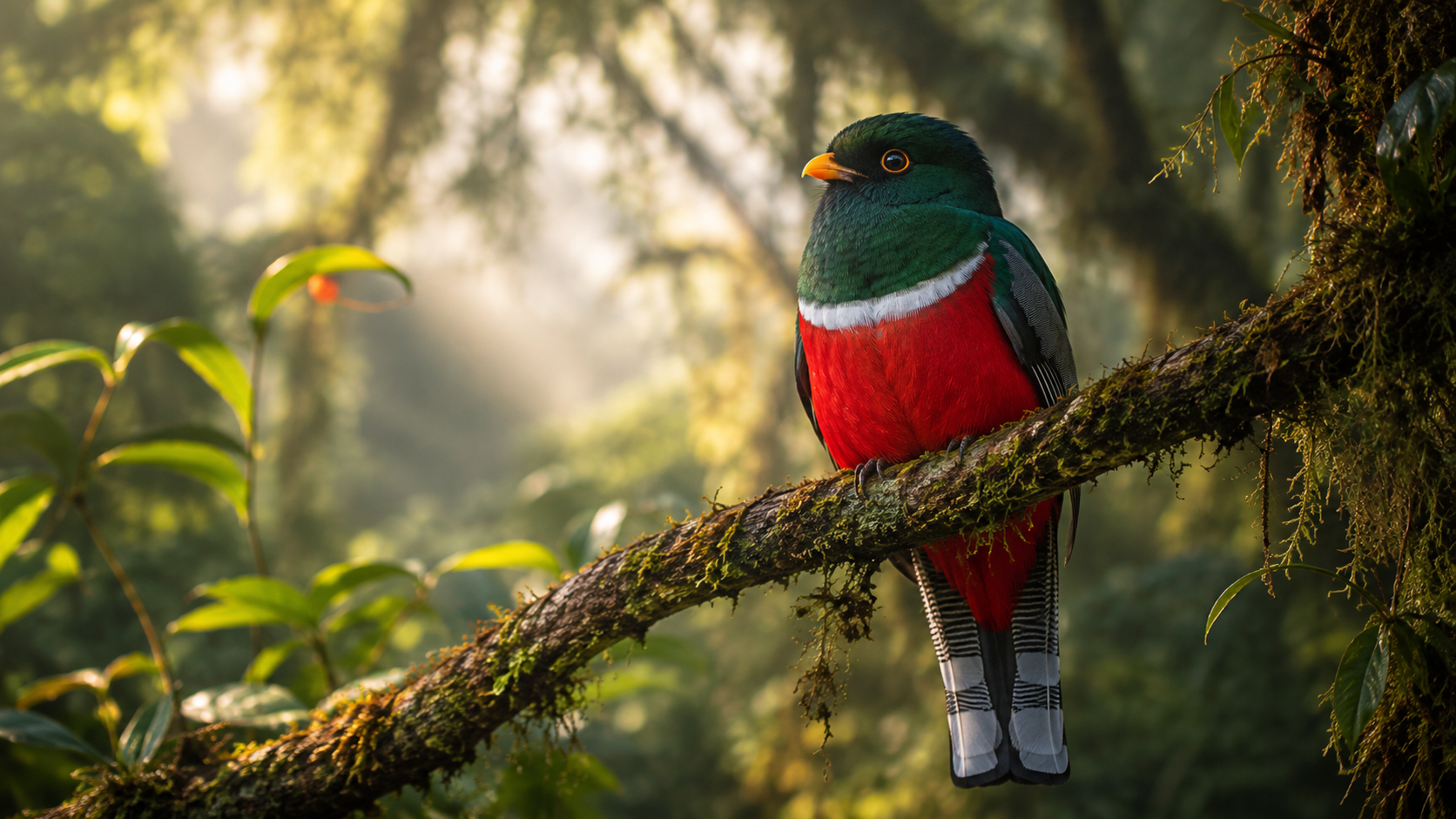 Forest Jewel
Collared Trogon
Trogon collaris
Primary Forest Interior
Jewel-toned forest spirits in crimson and emerald who perch perfectly still after landing. Among the most striking birds in any forest on Earth.
Least Concern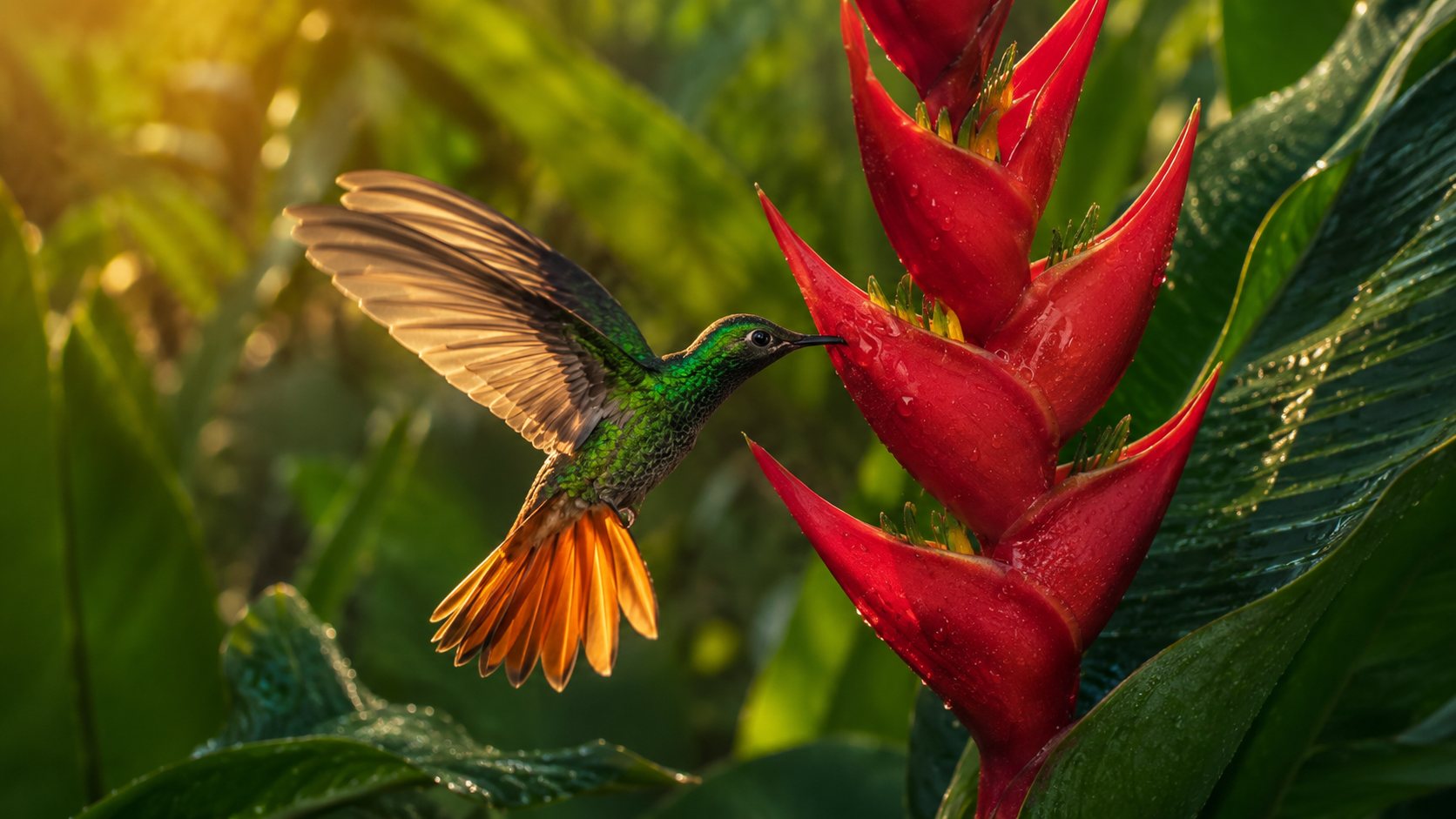 Primary Pollinator
Rufous-Tailed Hummingbird
Amazilia tzacatl
Forest Edge · Gardens
Living helicopters whose wings beat 50 times per second. Their long memory for flower routes makes them indispensable pollinators and the most frequent winged visitors to the sanctuary's gardens.
Least Concern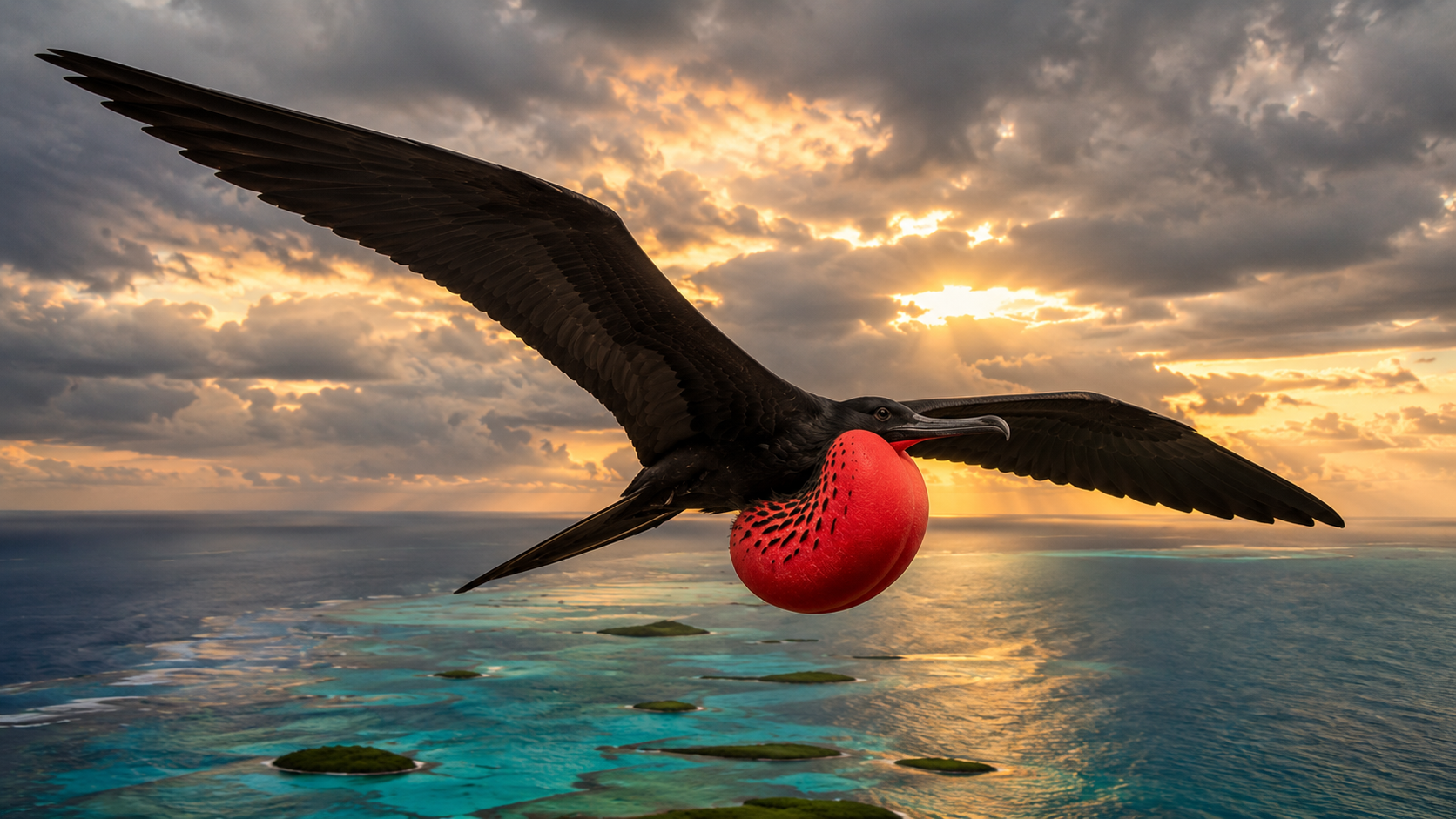 Sky Sovereign
Magnificent Frigatebird
Fregata magnificens
Open Sky · Coastal Islands
Aerial pirates with a 7-foot wingspan who never land on water despite living above it. Males inflate a brilliant red throat pouch during courtship—visible from the sanctuary's shores.
Least Concern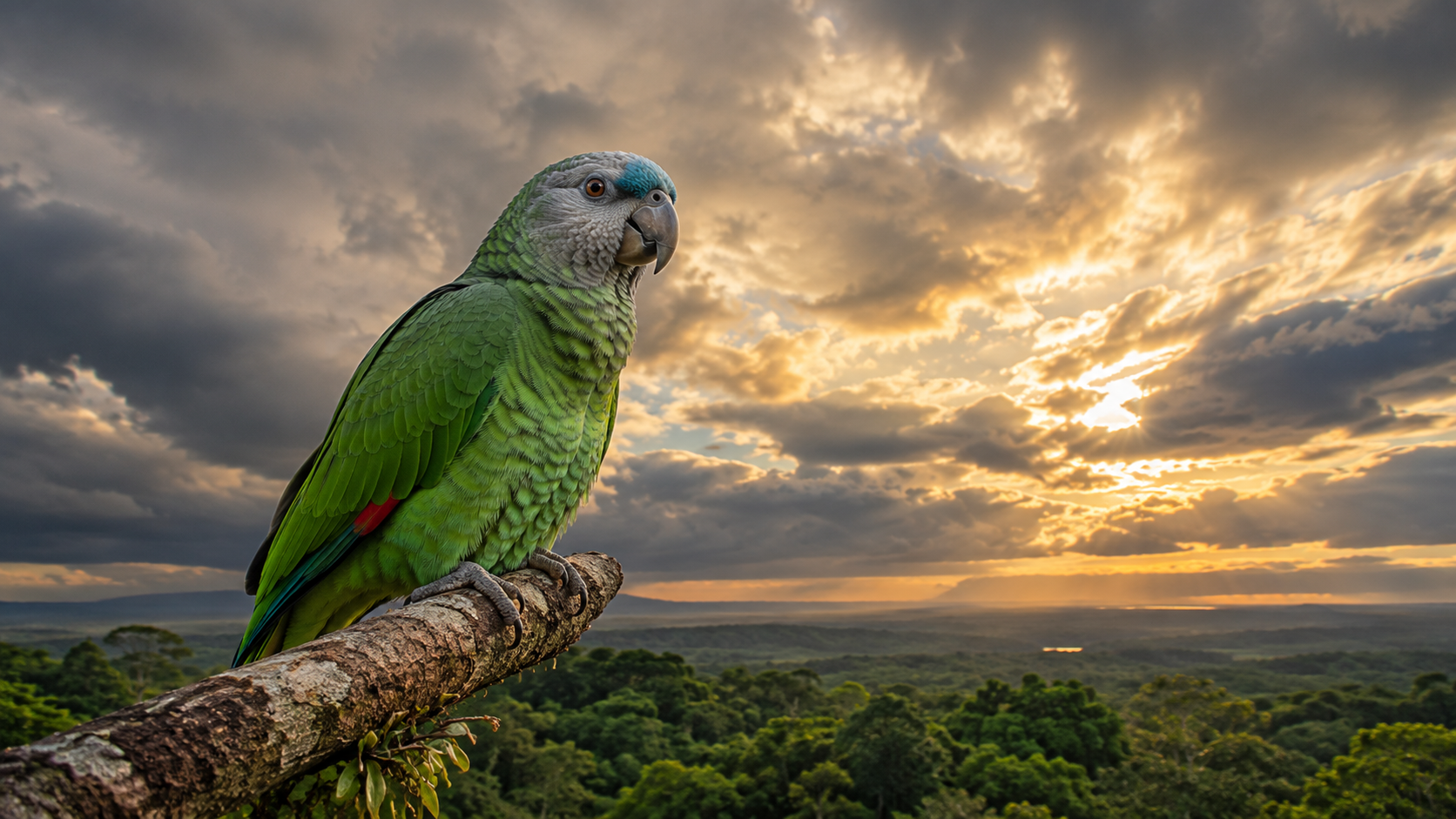 Largest Amazon Parrot
Mealy Amazon Parrot
Amazona farinosa
Humid Lowland Rainforest
The largest parrot in Panama bar the macaws—their enormous flocks of hundreds descend on the canopy at dusk with raucous calls. A signature sound of the Bocas del Toro evening sky.
Near Threatened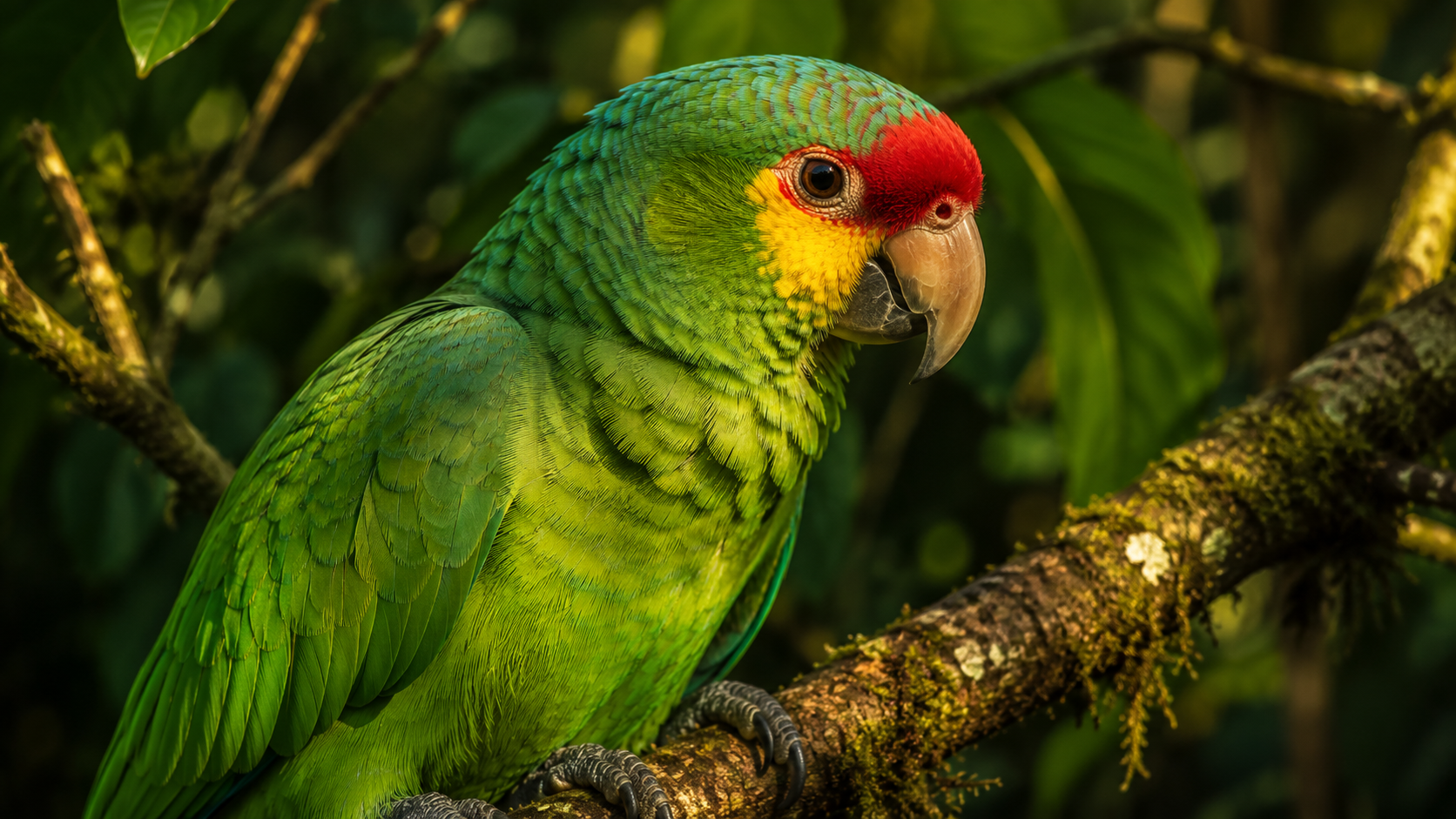 Dawn Flier
Red-Lored Parrot
Amazona autumnalis
Lowland Rainforest · Waterways
Unmistakable for their bright red forehead and lores. They fly in pairs to feeding grounds at dawn, filling the forest edge with a distinctive call unique to Panama.
Least Concern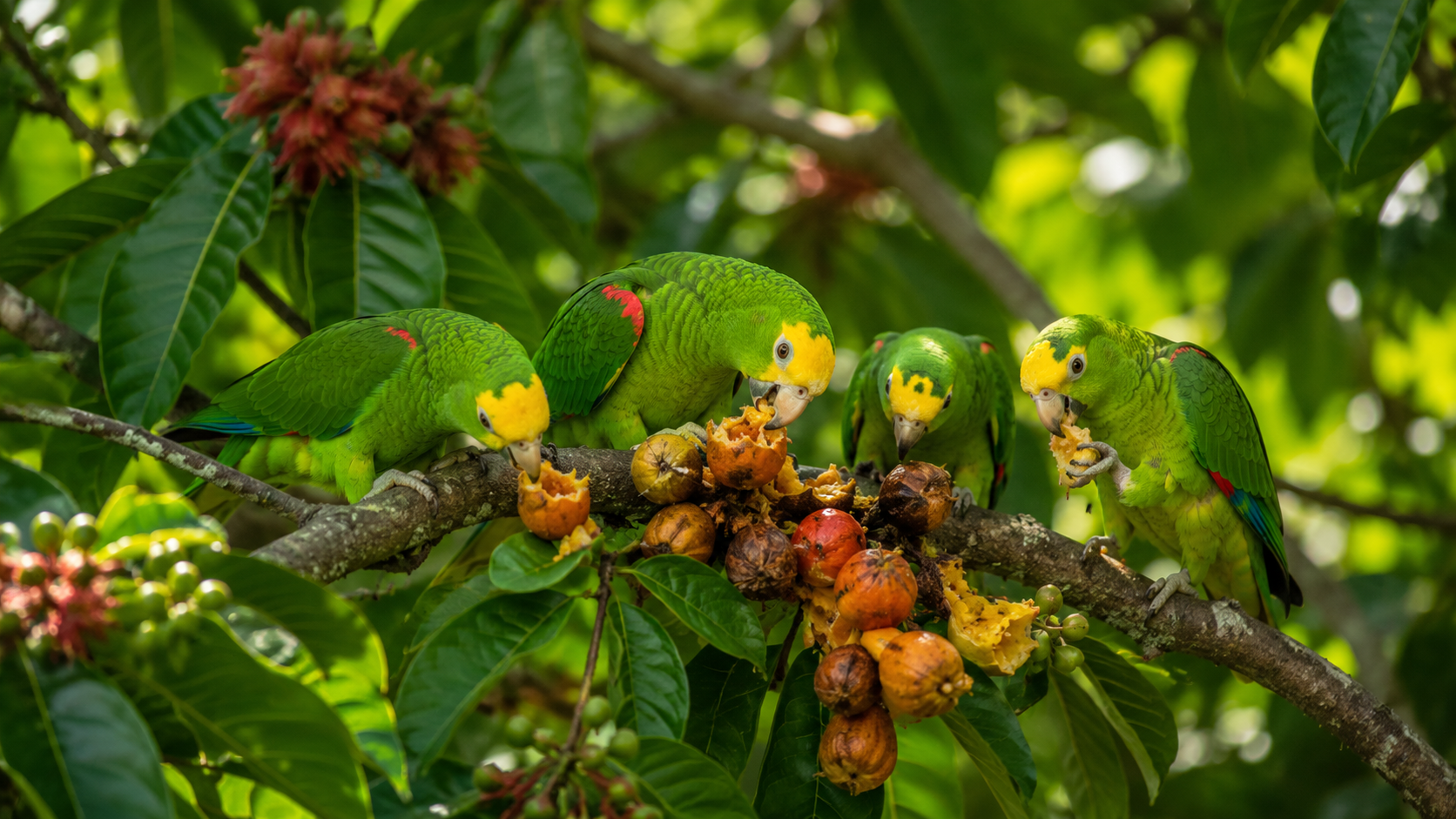 Canopy Forager
Yellow-Crowned Parrot
Amazona ochrocephala
Forest · Clearings
Their yellow crown flashes in the canopy as they navigate between fruiting trees. Intelligent and vocal, among the most observed parrots on the peninsula.
Least Concern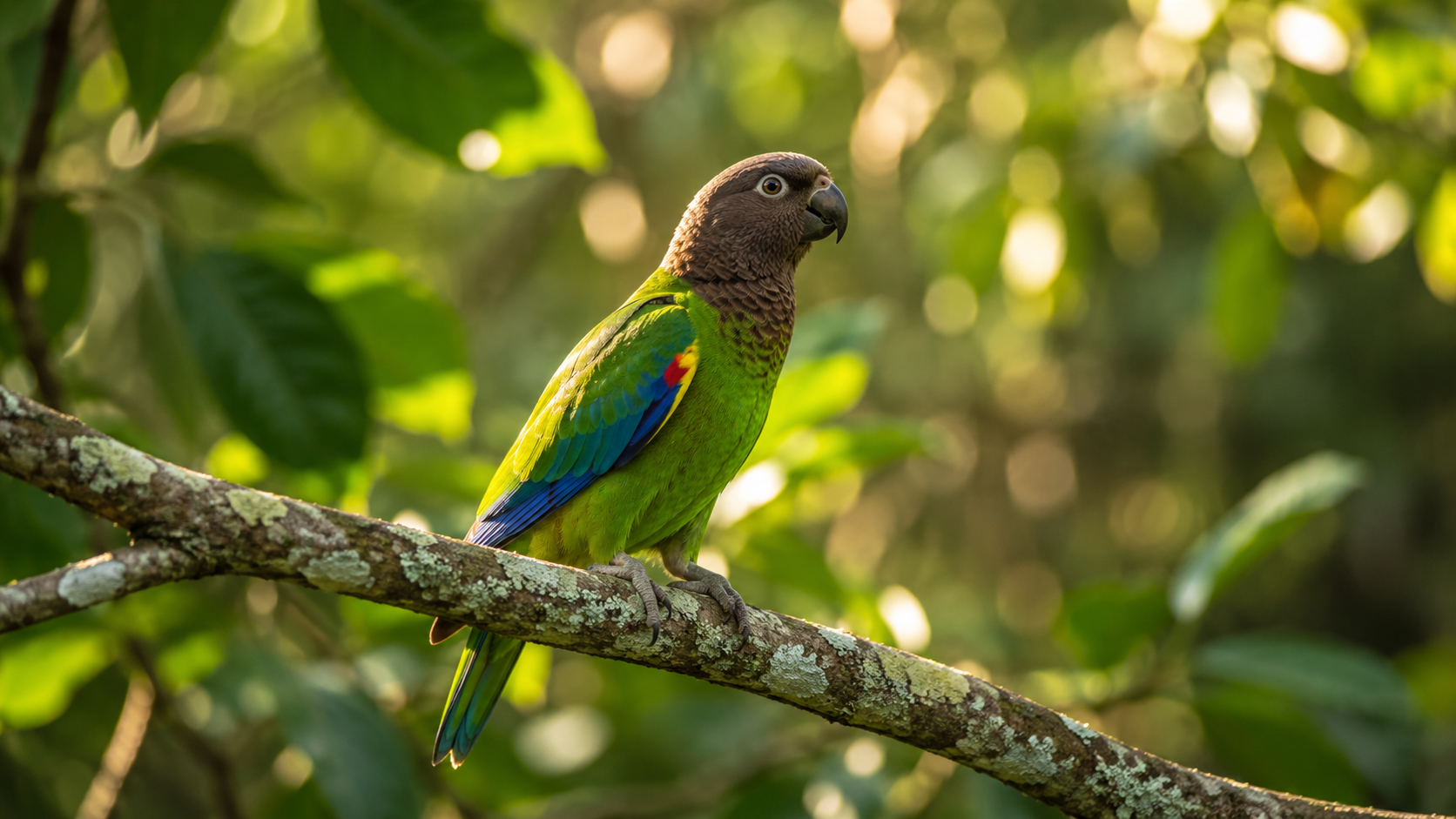 Caribbean Slope
Brown-Hooded Parrot
Pyrilia haematotis
Humid Forest · Canopy
A small jewel-like parrot of the Caribbean slope whose brown hood and red ear patches distinguish it from the larger amazons. Often seen in fast-moving flocks at the forest canopy.
Least Concern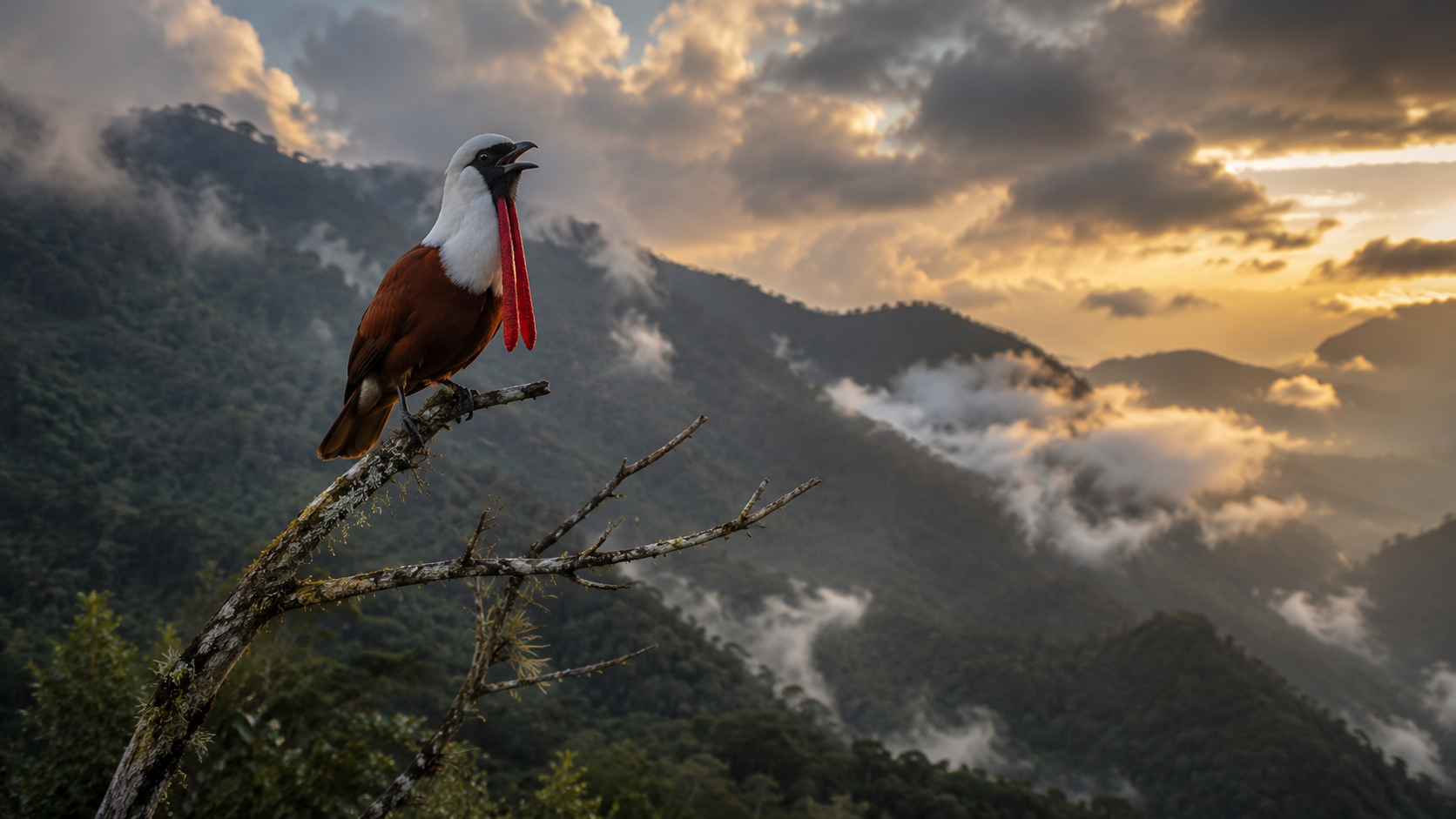 Seasonal Visitor
Three-Wattled Bellbird
Procnias tricarunculatus
Highland · Seasonal Visitor
Three pendulous wattles hang from its bill and its metallic 'bonk' call carries an extraordinary distance. A seasonal visitor to Bocas del Toro that cannot be ignored.
Vulnerable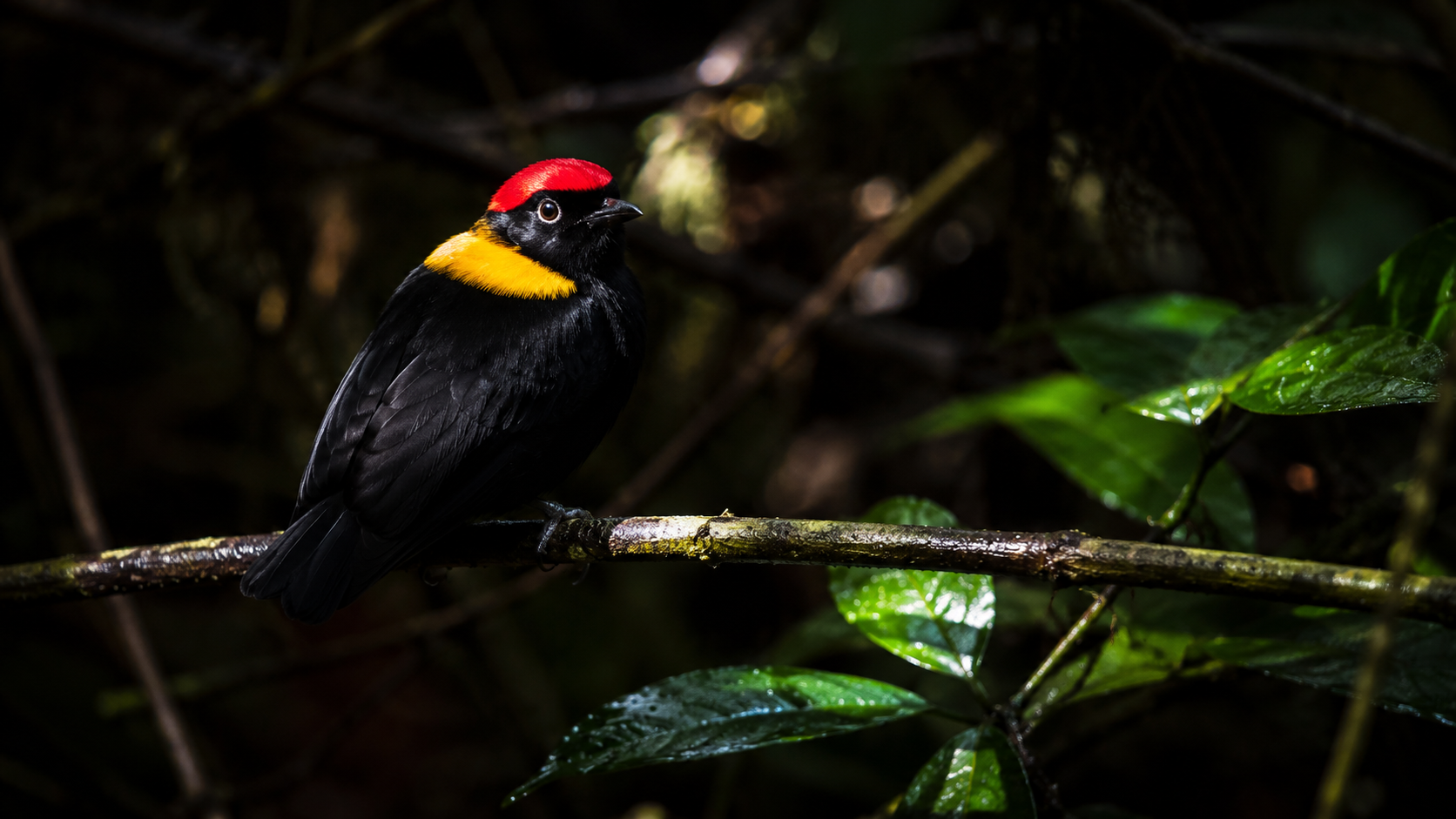 Lek Dancer
Golden-Collared Manakin
Manacus vitellinus
Forest Understory · Leks
A showman of the forest floor—males perform rapid snapping wing-beats in courtship leks, their golden collar blazing against the dark understory.
Least Concern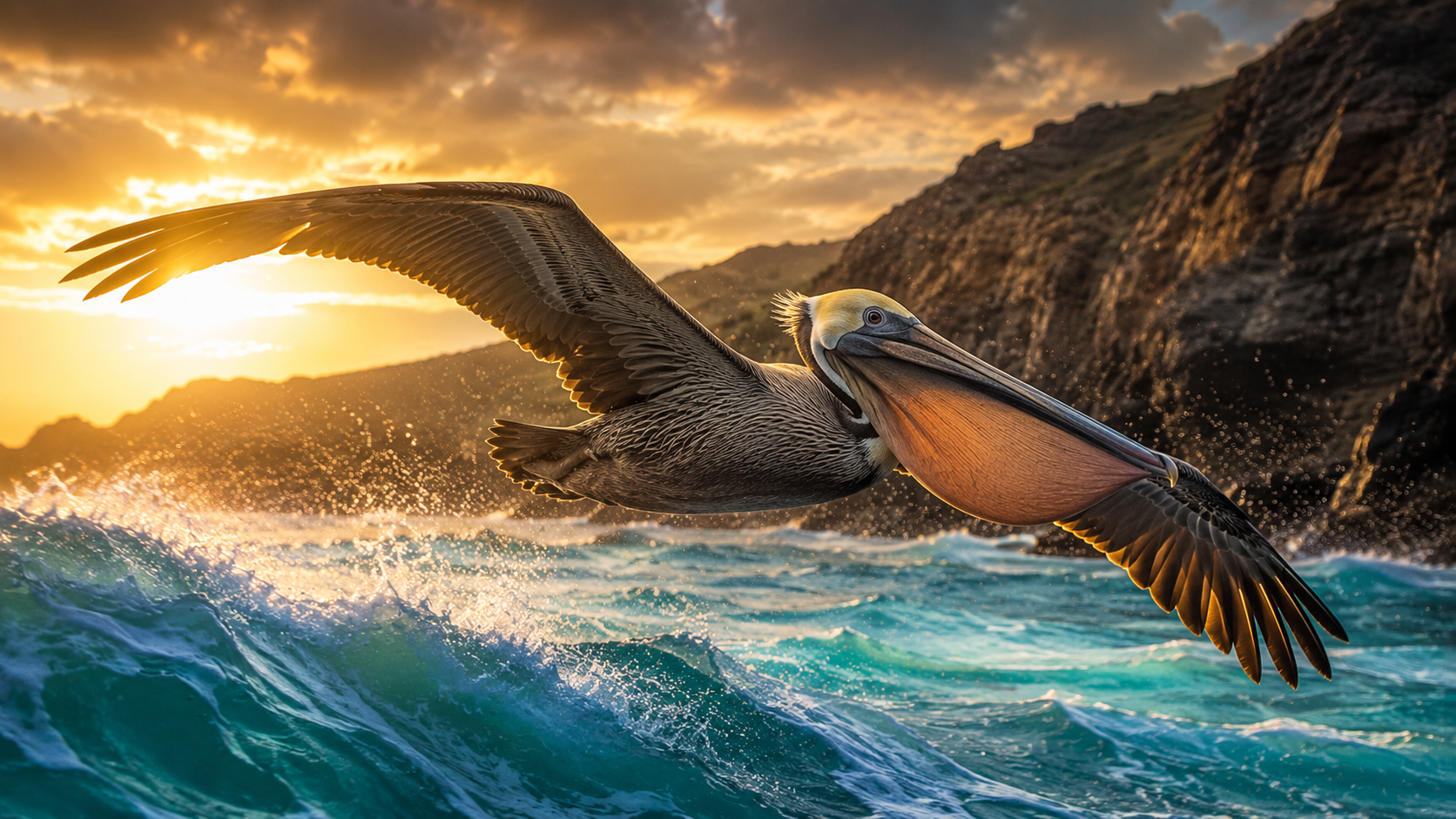 Coastal Icon
Brown Pelican
Pelecanus occidentalis
Coastal Waters · Mangroves
Ancient aerial divers whose tremendous bill pouches scoop fish in breathtaking plunge dives. A constant companion along the peninsula's shores.
Least Concern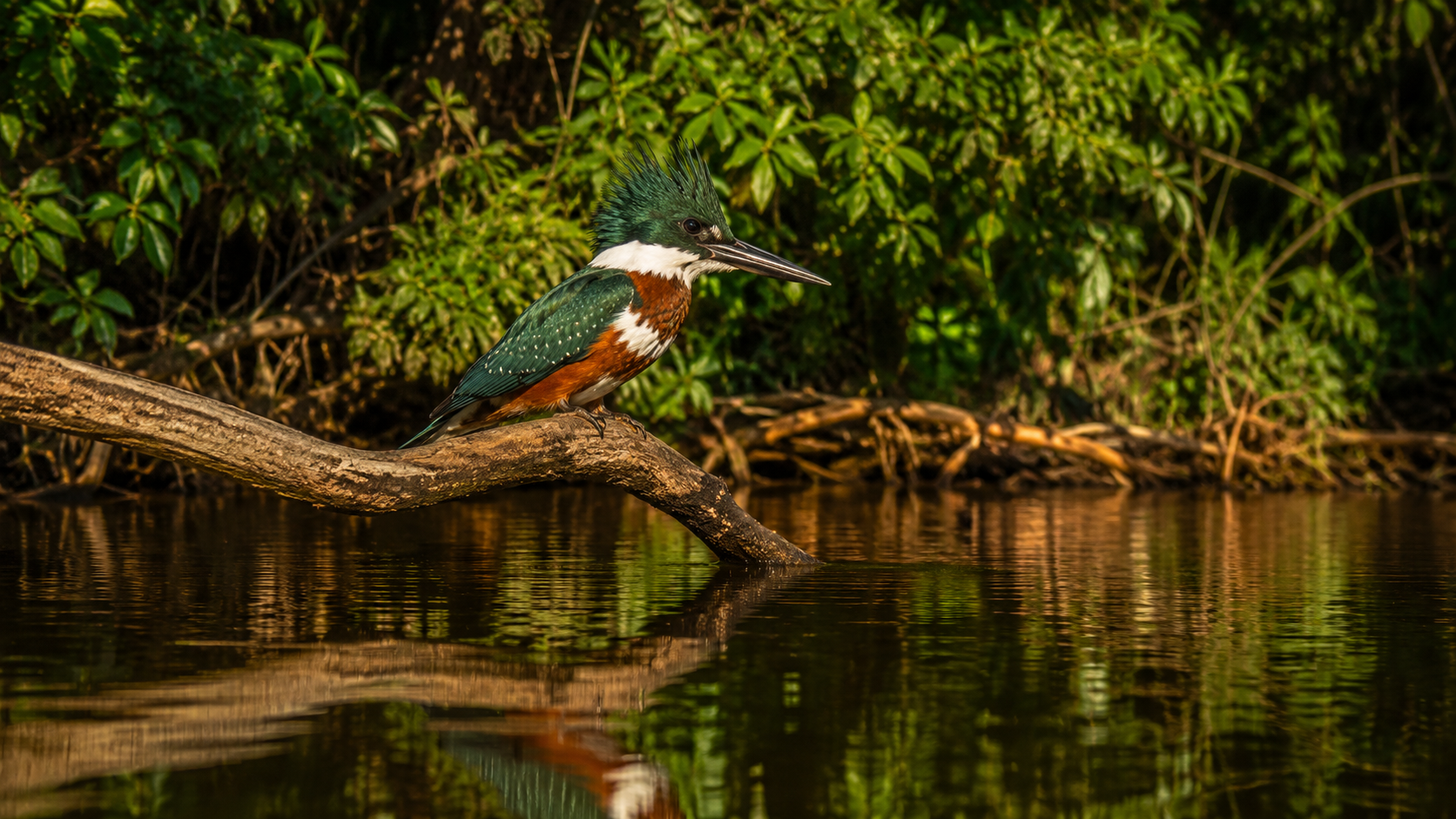 Waterway Sentinel
Amazon Kingfisher
Chloroceryle amazona
Rivers · Channels · Lake Edge
A brilliant emerald and white sentinel of the waterways—perching motionless before plunging with total accuracy into the water below. One of six kingfisher species in Panama.
Least Concern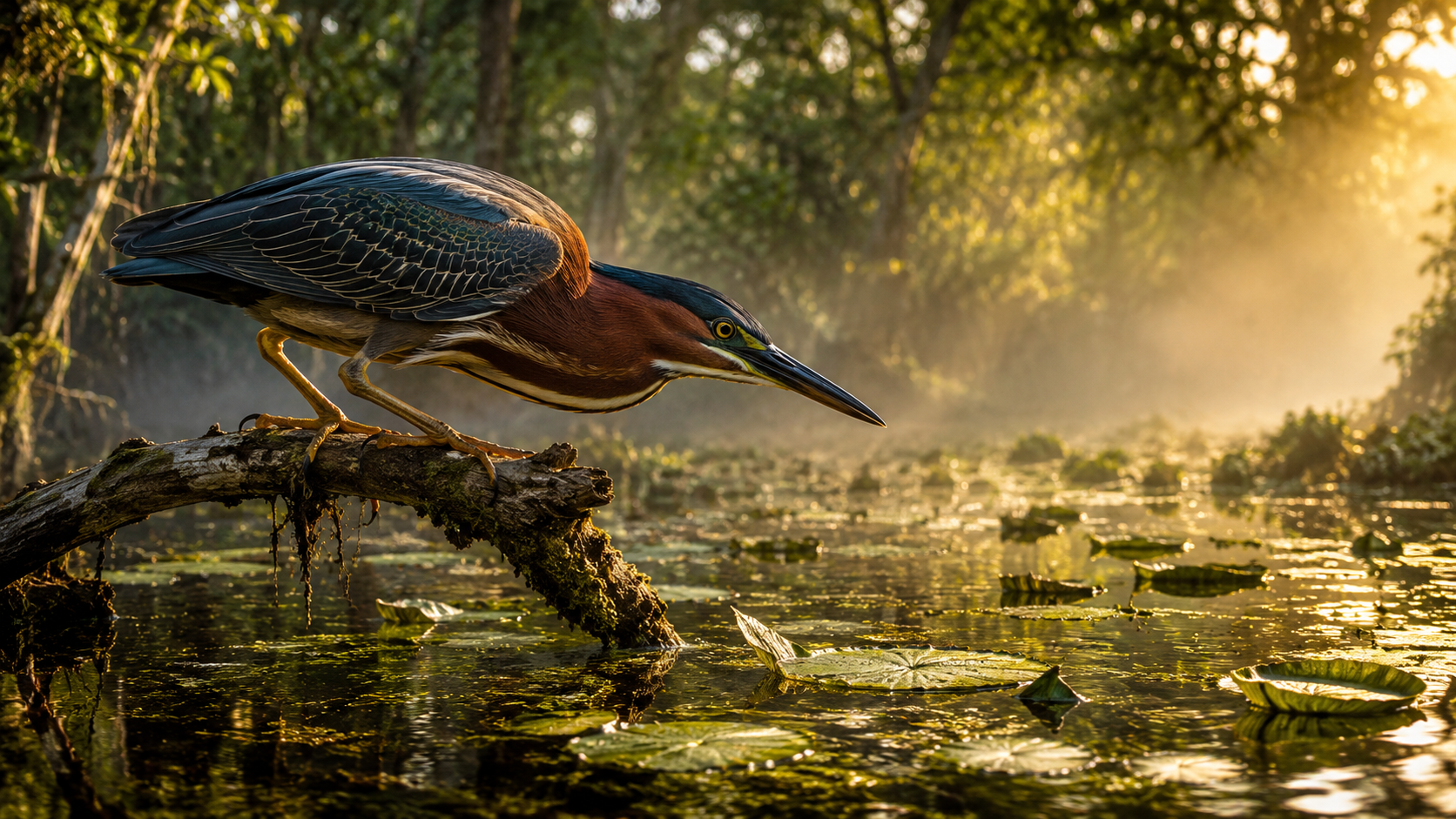 Tool-Using Bird
Green Heron
Butorides virescens
Mangroves · Lake Edge · Streams
A tool-using heron who drops bait onto the water surface to lure fish—one of the few non-primate tool users in the animal kingdom, hunting along every waterway at Tai Nuare.
Least Concern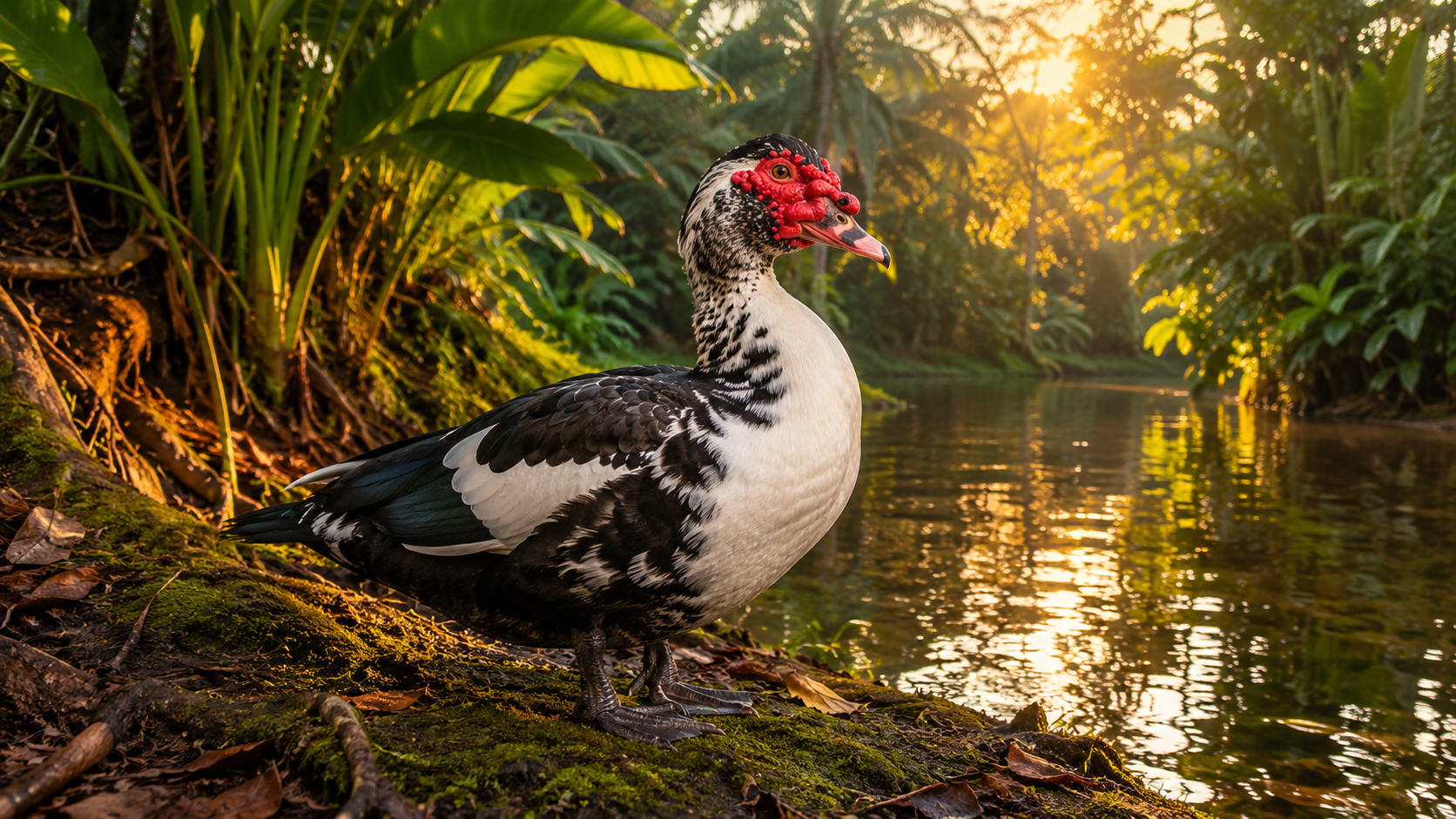 Lake Resident
Muscovy Duck
Cairina moschata
Forest Lakes · Rivers · Wetlands
Large iridescent black-green waterfowl of the forest waterways—wild Muscovy ducks nest in tree hollows above the water. Entirely at home on the Tai Nuare lake.
Least ConcernThe Tai Nuare freshwater lake holds its own universe.
The Tai Nuare freshwater lake and channel system hosts its own distinct ecosystem—freshwater turtles, giant river shrimp documented directly in Bocas del Toro's waterways, caimans, and the famous basilisk who runs on water.
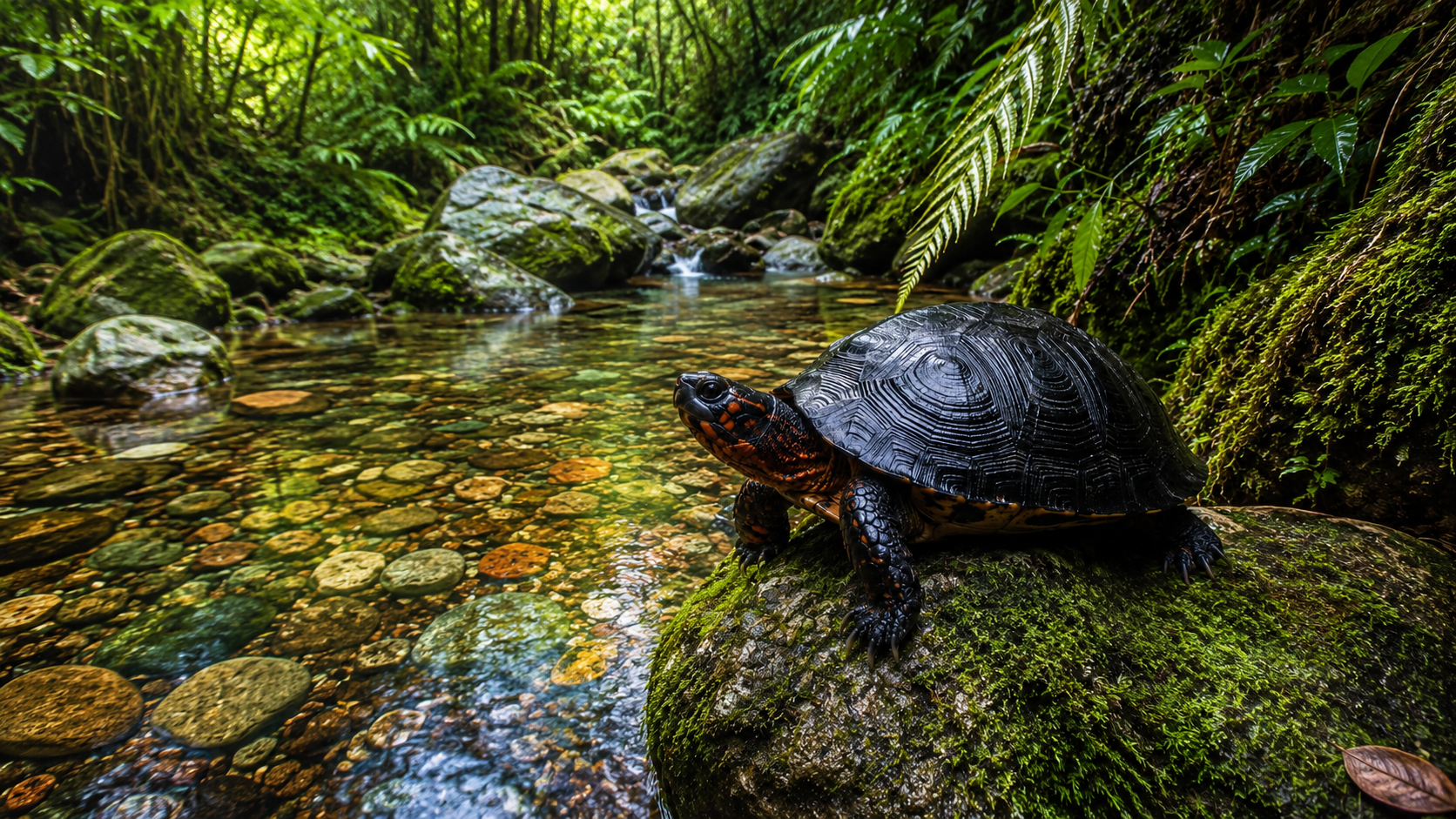 Peninsula Lake Resident
Black Wood Turtle
Rhinoclemmys funerea
Rivers · Lakes · Marshes
The largest freshwater turtle in Panama—black-shelled with vivid yellow spots on both jaws. An omnivore who forages along riverbanks and lake edges, basking on logs in the morning sun.
Vulnerable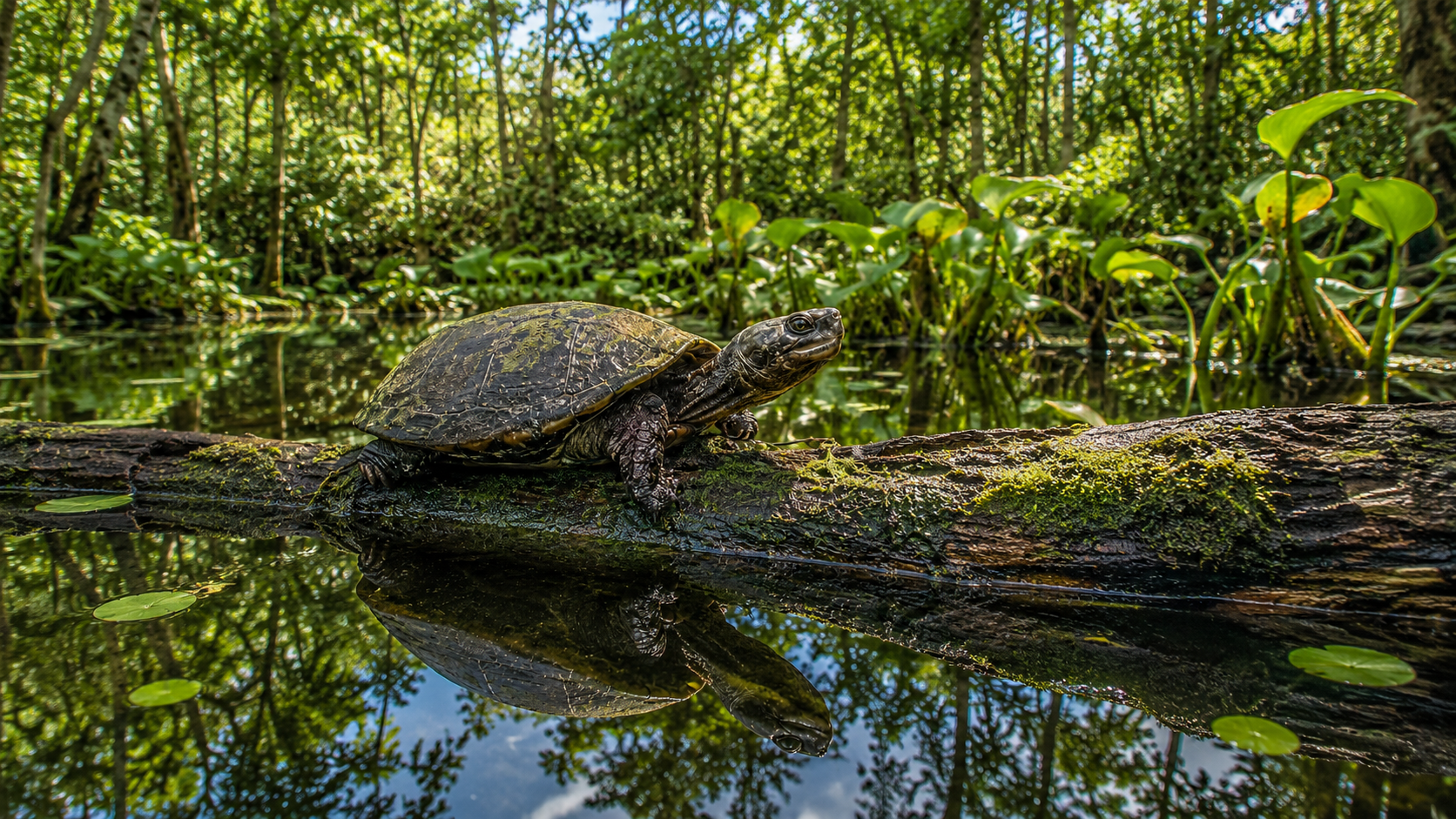 Wetland Edge
Central American Mud Turtle
Kinosternon angustipons
Shallow Ponds · Wetland Edges
A small secretive freshwater turtle who buries itself in mud during dry periods and re-emerges with the rains. Found in the shallow pond and wetland edges of the Bocas del Toro lowlands.
Vulnerable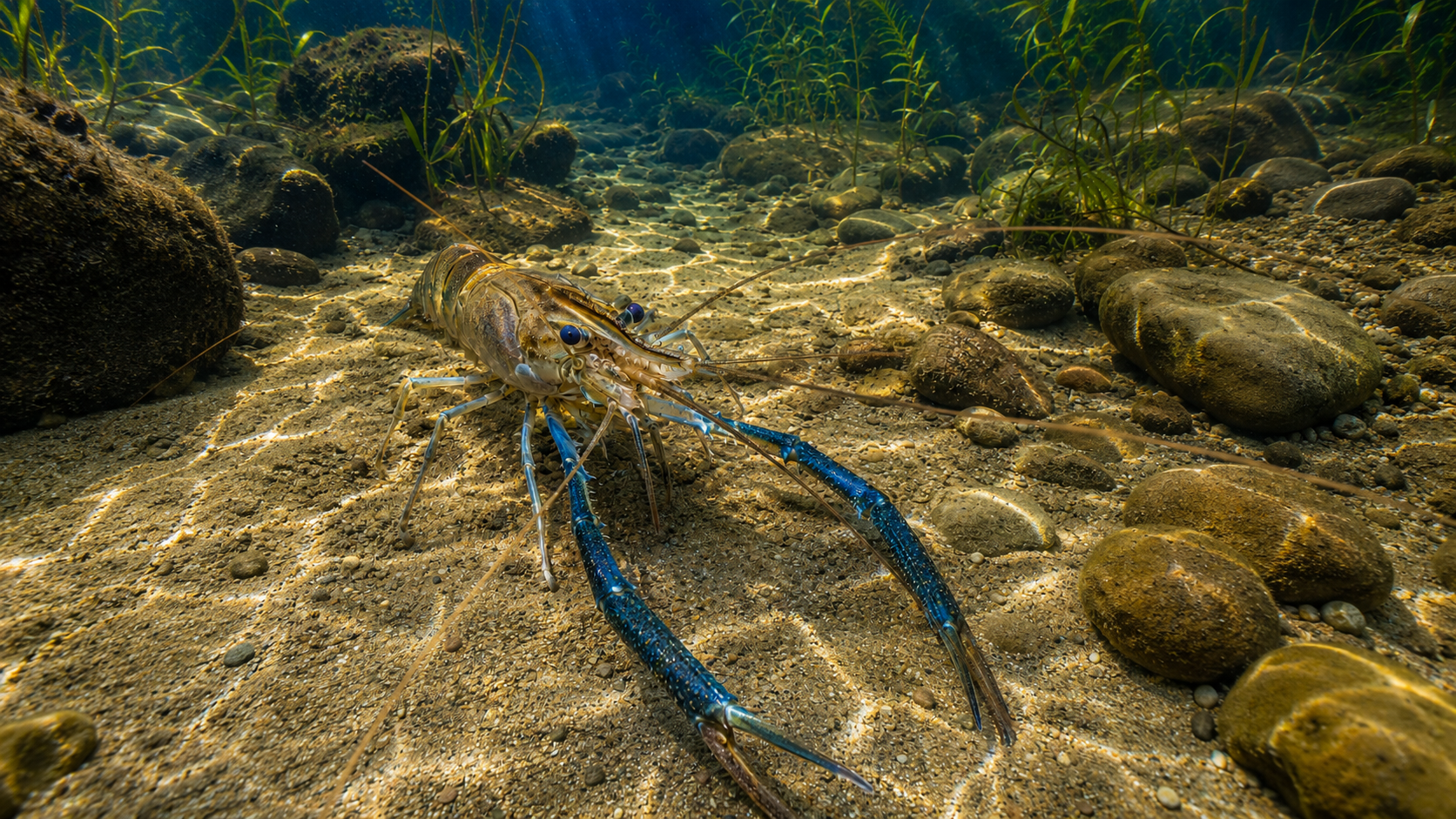 Documented Bocas del Toro
Giant River Shrimp
Macrobrachium acanthurus
Rivers · Streams · Lake
Documented directly in Bocas del Toro's rivers and ponds—these large, long-clawed freshwater shrimp are a vital link in the aquatic food web. Males develop striking outsized claws used in display and combat.
Least Concern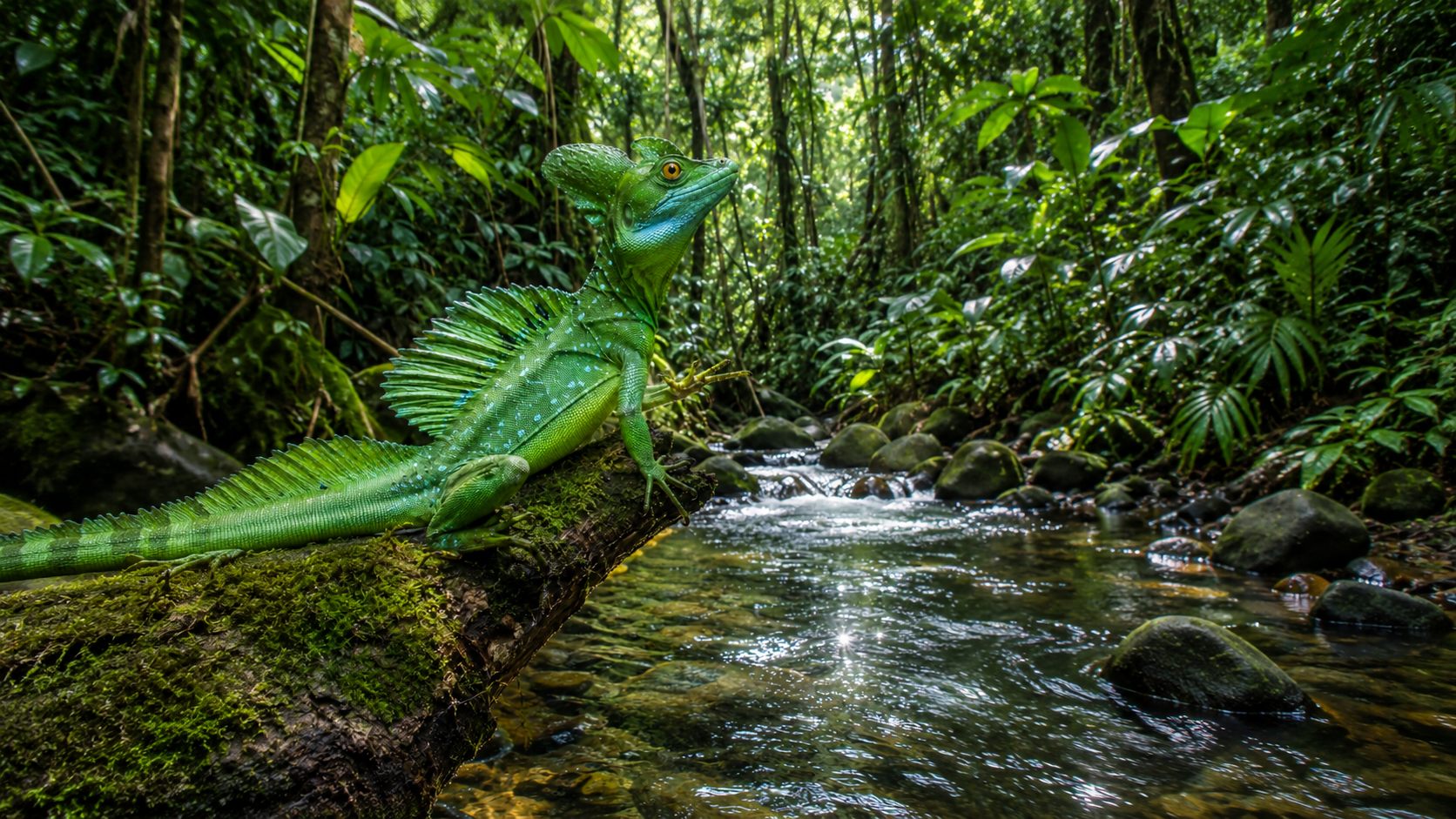 Runs on Water
Green Basilisk
Basiliscus plumifrons
Lake Edge · Stream Banks
The 'Jesus Christ Lizard'—named for its ability to sprint across the water surface on its hind legs. Brilliant green males with crested heads patrol the lake edge like tiny living dinosaurs.
Least Concern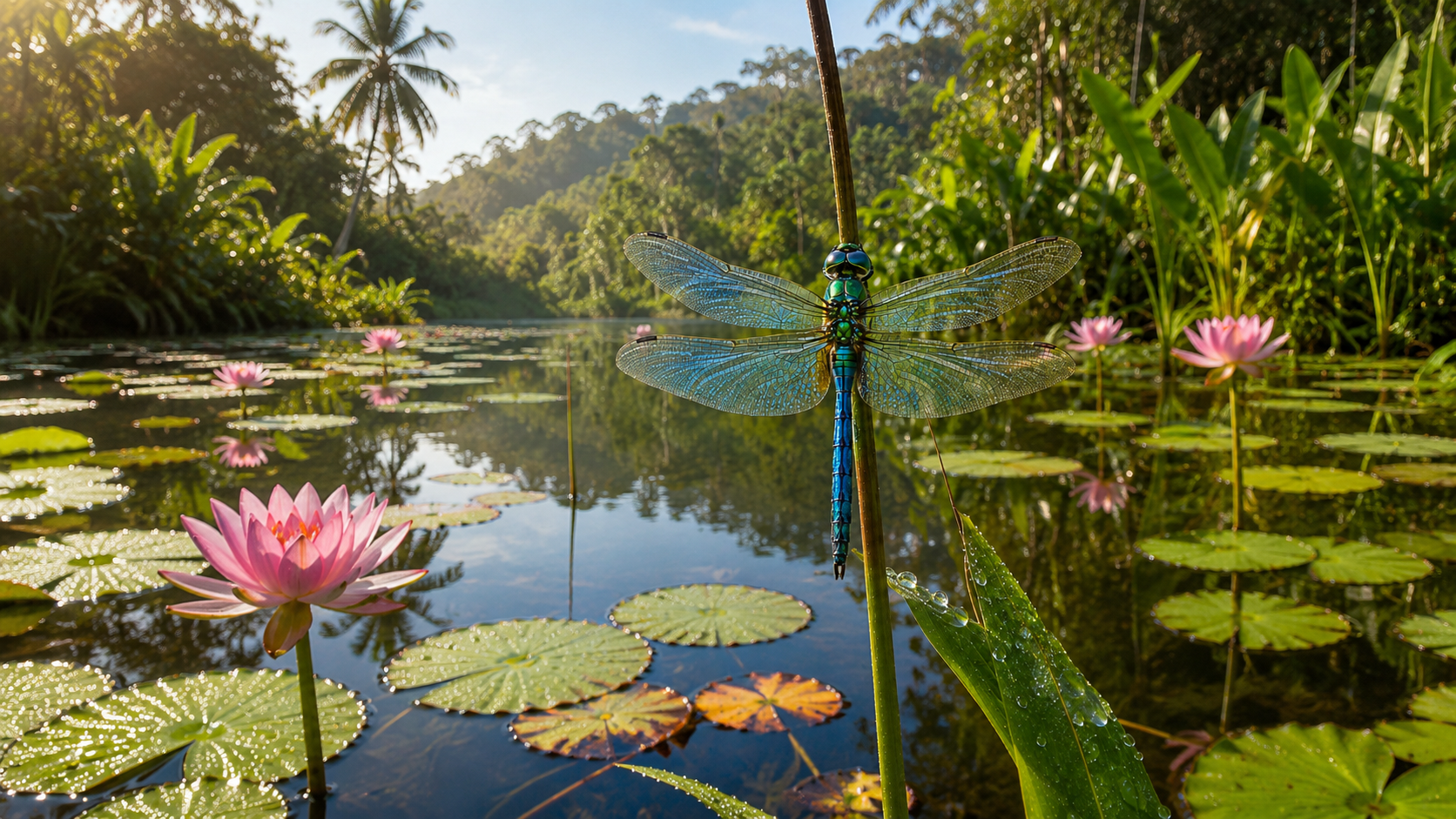 Mosquito Control
Tropical Dragonfly
Pantala flavescens
Lake Surface · Stream Margins
Aerial acrobats of the lake surface who hunt mosquitoes with near-100% success rates. Their presence signals a clean, oxygen-rich lake.
Least Concern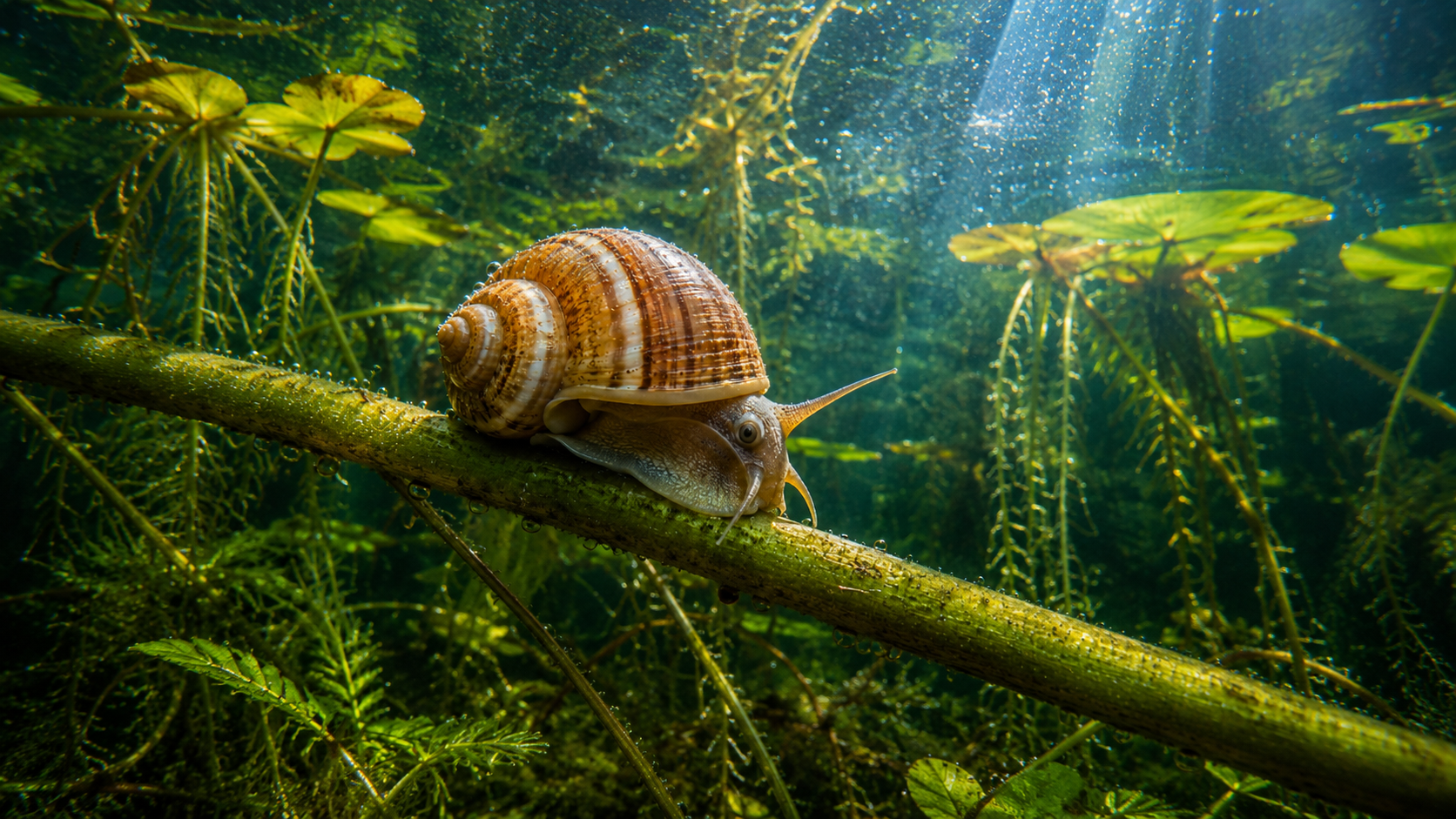 Lake Ecosystem Engineer
Apple Snail
Pomacea sp.
Lake Bed · Slow Streams
Large apple snails who graze algae from submerged surfaces, keeping the lake floor clean. Their bright pink egg clutches above the waterline are one of the most distinctive sights along the lake edge.
Least ConcernOur Covenant
We do not own this land.
We hold it in trust.
Every structure at Tai Nuare is designed in conversation with the species who were here first. Our marine sanctuary, no-harvest shorelines, and dark-sky protocols exist so that the residents of this page remain residents — not memories.